


As many Wake Forest students will tell you, the “study abroad experience” is a hallmark of junior year on this campus. The story goes that during junior year, students embark on a grand adventure around the world where they transform into the best version of themselves while making lifelong memories and new friends. It’s so deeply ingrained into our campus culture that Wake Forest students have developed traditional meetups across Europe, such as the Ice Bar in Amsterdam, Halloween in Barcelona and Oktoberfest in Germany.
When asked about their time studying abroad, most students get a wistful look in their eyes and reflect that it was simply “the best.”
Why we call study abroad “the best”
In some ways, this reputation is earned. There are parts of studying abroad that can be, quite frankly, “the best.” For me, spending the fall in London offered opportunities that I never dreamed of having and for which I will always be grateful. Drinking hot chocolate in Paris, singing karaoke in Florence, making stroopwafels in Amsterdam and seeing the Northern Lights in Norway are all experiences I wouldn’t trade for the world. I met fun and friendly people, both within and beyond my own program, and I continue to keep up with some of them, even though they attend different universities and live in other parts of the world.
In many ways, studying abroad can be exactly as fun as it sounds. Many students travel every weekend, discovering beauty across the globe. I explored local markets and boutiques, met people of different nationalities, frequented museums and concerts and found my own place in each new city I visited.
But just because an experience is beautiful doesn’t mean it’s easy.
What get lost in the recap
When reflecting on study abroad, it’s easy to gloss over the more challenging aspects. These moments rarely make it into the post-study abroad debrief, mostly because they’re not as appealing as the Instagram stories of Big Ben or the sentence “I was in Budapest last week.” However, that doesn’t mean that these parts don’t exist. They are real and very valid.
A common, yet little-discussed dynamic of study abroad is an overwhelming pressure to “do it all.”
Since these are supposed to be the “best days of your life,” it is easy to become stressed about fitting all of your dream vacations and experiences into a condensed period of a few months. I vividly remember sitting down with my iPad calendar during the first few days of the semester and marking off my weekends with the labels “Paris??” and “Amsterdam??” in different colors. As I scrolled further down, I quickly realized that three months’ worth of weekends was not enough time to live out all of my study abroad dreams.
In addition to this disappointment, I found it difficult to stay still during my study abroad semester. Every second I found a moment to breathe and relax felt wrong, and it was hard to escape the feeling that I was wasting precious time. While this feeling did push me to explore places I wouldn’t have otherwise, like a cafe at the bottom of Primrose Hill and the transport museum off Covent Garden, the constant movement sometimes left me feeling drained at the end of the day.
Fatigue was a close companion during my study abroad experience, following me from country to country. Even as I danced in a Croatian bar or swam off the coast of Greece, I never felt fully rested.
The most surprising part of my study abroad experience, though, was the amount of time I spent alone. Even though I was surrounded by sweet people, I found that differences in schedules, interests, energy levels and distances from the city often left me on my own during the week. I have always prided myself on being someone who thrives with alone time. However, being by myself abroad was a different experience entirely. I had to navigate unfamiliar places without others to guide me or laugh with me when I boarded yet another wrong bus. For how busy studying abroad was, sometimes it was strangely quiet.
With this unexpected quiet came an unexpected sense of homesickness. On Wake Forest’s campus, my bouts of homesickness are few and far between, mostly because I have settled into the rhythms of Wake Forest and the surrounding city of Winston-Salem. In London, though, I sometimes found myself missing parts of my American life, like the taste of a cold Chick-fil-A lemonade, the sound of a warm southern accent or the comforting familiarity of the Reynolds gym. At times, I felt like I might throw the next plate of fish and chips I saw out the window.
And yet London still became my home.
This didn’t happen all at once or without any effort. Instead, it happened through the joy and through the pain. London snuck into my heart with every quick trip to Tesco, every random afternoon downpour and every glimpse I caught of the Elizabeth Tower. In all of the excitement of studying abroad, I forgot a key aspect: making a new home is hard everywhere. All of these aspects were growing pains, similar to the ones I experienced during my freshman year at Wake Forest and then promptly forgot.
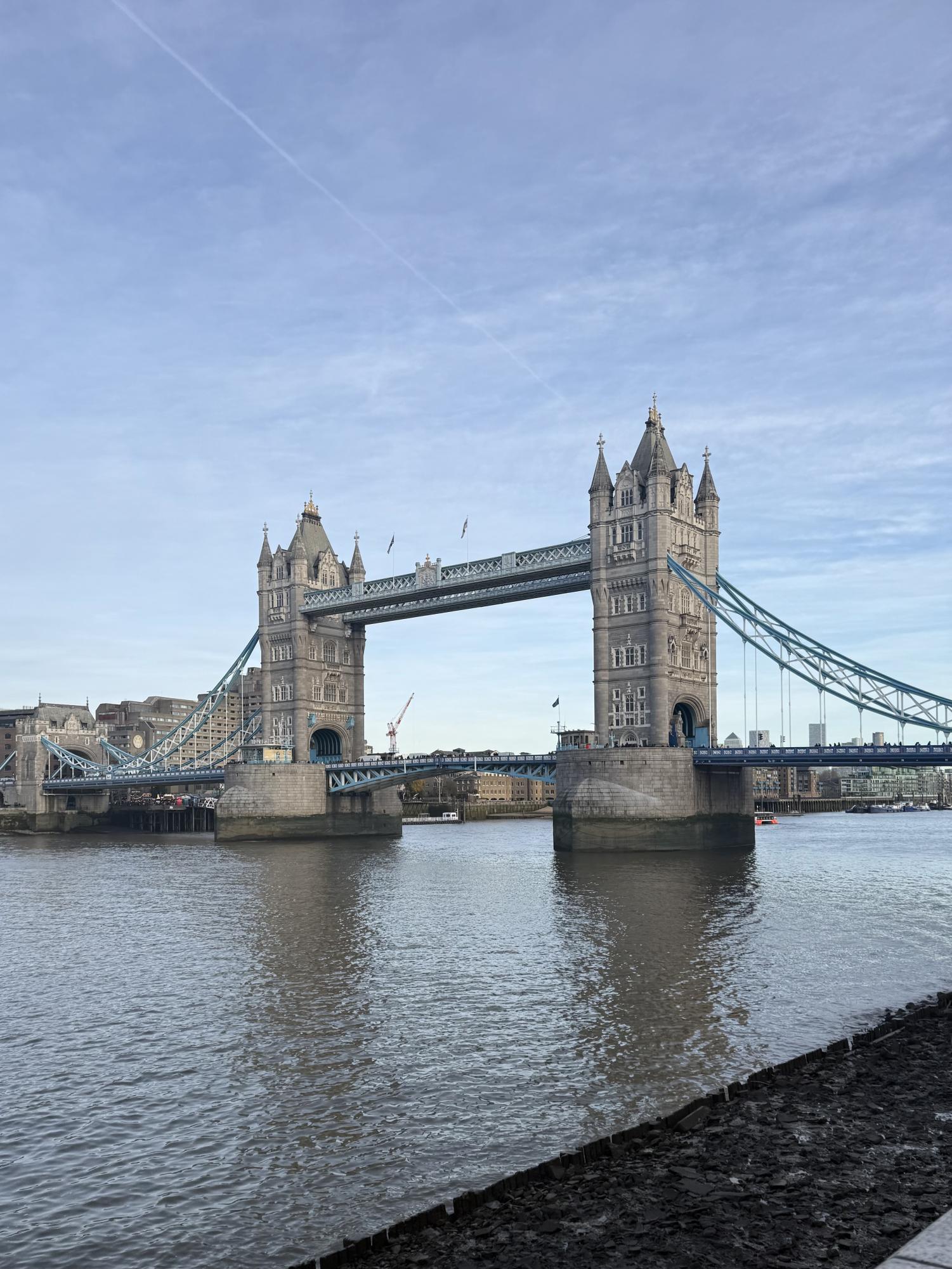
Because studying abroad is placed on a pedestal in many descriptions, I assumed that any struggle meant that I was failing. However, I learned that these struggles are an inseparable part of the experience that helped me grow and embrace the rainy city as home. Not every moment of study abroad has to be “the best,” and not every day was easy, but for me, it was still worth every second. I pushed myself out of my comfort zone, faced life’s highs and lows and most importantly, found another place in the world to love – one I can’t wait to return to.


