
Why would a leader who risked her life for democracy hand her Nobel Peace Prize to Donald Trump?
The Norwegian Nobel Committee awarded Venezuelan opposition leader María Corina Machado the Peace Prize in 2025 for her work to defend the country’s elections. Machado put herself at great risk to accept the prize in Oslo, Norway – disguising herself and sailing a dangerous route to escape Venezuela.
Last month, after the United States captured Maduro, Machado presented her Nobel Peace Prize to President Trump in recognition of his “principled and decisive action to secure a free Venezuela.” Later, Trump unsurprisingly celebrated on Truth Social.
“María presented me with her Nobel Peace Prize for the work I have done. Such a wonderful gesture of mutual respect. Thank you María!” Trump wrote.
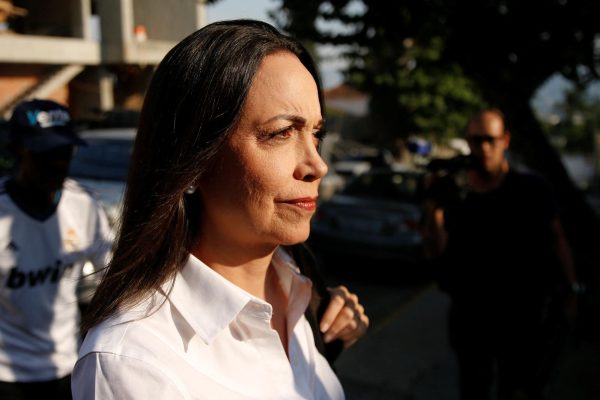
After reading the headlines, I found myself questioning why Machado would do such a thing. Machado – a symbol of strength, courage and resilience – gave her achievement to a figure whose political record reflects opportunism rather than the courage and sacrifice the prize is meant to honor. It reminded me of the many instances in which Trump has taken credit for more than he should.
For example, the president has frequently framed himself as a champion of veterans, despite the fact that many policies he publicly claimed as personal achievements were largely the result of bipartisan legislative work that predated his involvement. Trump has also claimed responsibility for economic growth and declining unemployment, particularly amongst communities of color, even though these trends began under the Obama administration.
A neutral committee awarded the Nobel Peace Prize to Machado, not to Trump, yet he happily seized public credit and association. He consistently claims legitimacy that others have earned.
Trump’s acts are not atypical. They follow a pattern. Many members of his current cabinet once openly criticized him, only to later fall in line in exchange for political power and proximity. During his first term, Trump demonstrated little loyalty to colleagues who challenged him, always quick to fire allies the moment they became inconvenient.
Now, Machado is the latest pawn in this framework. Rather than further engaging with Machado and the rest of the Venezuelan opposition, Trump recently praised Maduro’s second in command, Delcy Rodriguez, claiming she is “giving us everything that we feel is necessary.” In doing so, he is directly offering collaboration with the very regime Machado risked her life opposing. It’s a slap in the face.
Trump has made it clear he believes that Machado “doesn’t have the support within or the respect within the country,” despite her party’s victory in the most recent presidential election. Additionally, he has made deliberately vague claims about his intentions for the future of U.S. involvement in Venezuela, remarking, “only time will tell” how long American oversight of the country will endure.
If Trump’s interest in Venezuela were purely humanitarian, Machado, who represents democratic legitimacy and popular support among Venezuelans, would remain central to his vision for the country’s future. Instead, Trump has sidelined her as he signals a willingness to engage with Maduro’s regime while hinting at vague strategic goals.