

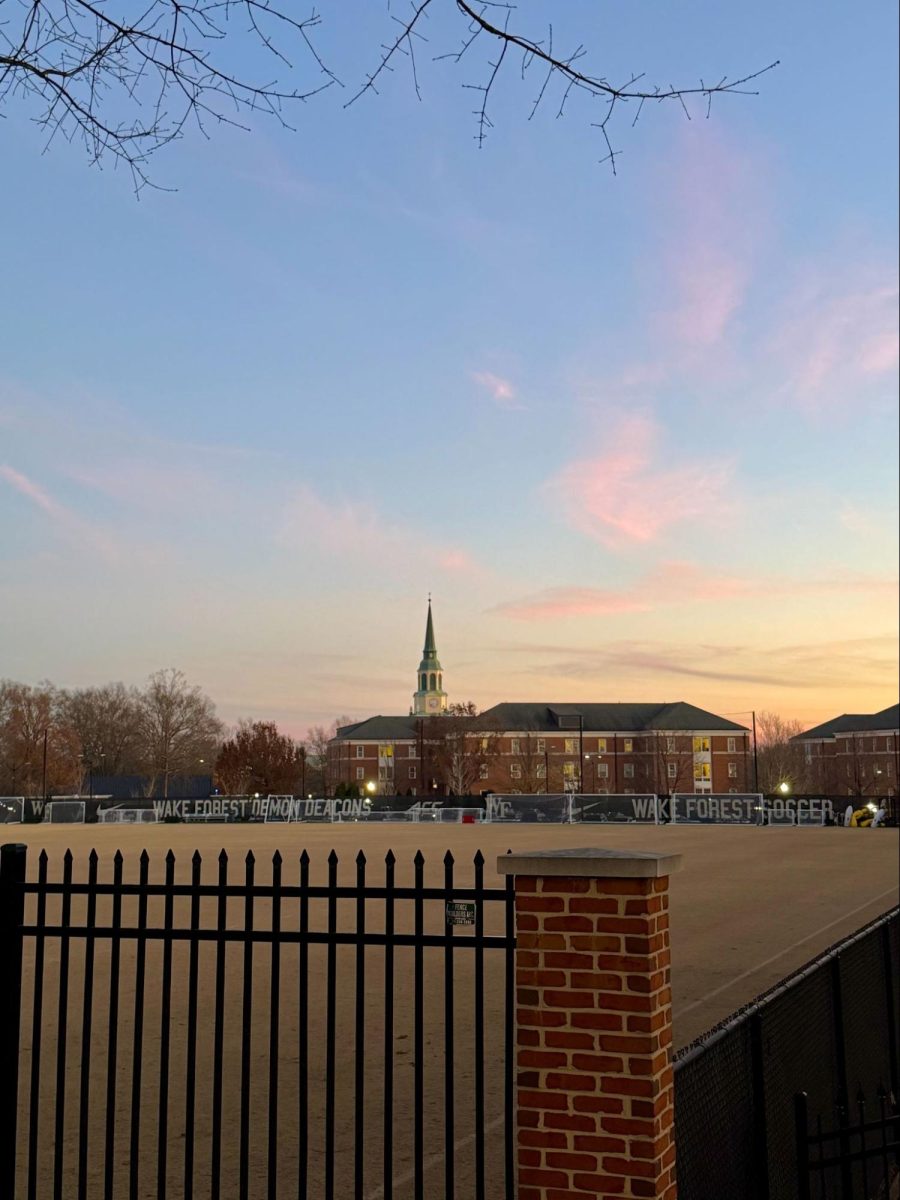
I started my time at Wake Forest this January as a mid-year sophomore transfer. People are always shocked when I tell them I transferred nearly 600 miles from home to a school where I knew almost no one. They ask me if it’s been hard to make the transition from Colgate University to Wake Forest, and I usually answer that it’s been much easier than I expected. This answer is generally true, but I have honestly had a lot of ups and downs.
Overall, however, Wake Forest’s resources and community have consistently helped me, even in times of stress.
My decision to come to Wake Forest was somewhat last-minute, and my turnaround between submitting my initial deposit and moving in for sorority recruitment was rapid. However, Wake Forest staff were extraordinarily helpful throughout my transfer process. I spent hours on the phone with academic advisors, Residence Life & Housing and the Office of Fraternity and Sorority Engagement. They gave me information that smoothed my transition to Wake Forest. I definitely struggled at times — particularly when selecting from limited housing and transferring my credits — but I always felt that I could reach out with any questions.
In particular, the Office of Fraternity and Sorority Engagement was an anchor during my transition to Wake Forest. Although I did not discover that I got into Wake Forest until a month after registration for sorority recruitment closed, I was able to register late with the help of Assistant Director Brittany Harris-Nelson. I’m grateful I had the opportunity to rush, as I have made some of my best friends through Greek life. The community I found in Delta Zeta has helped me through the more difficult days.
When I tell people my transition has been easier than expected, it is almost completely because of the support network I was able to form through my Greek life experience.
Another strong point was the support I received from faculty members after coming to campus. Something that stood out to me immediately about Wake Forest was how willing my professors were to meet in person. Whenever I had an issue or concern, all I needed to do was contact the right person, and they were happy to set up a time to meet and talk me through my struggles. The ability to discuss things face-to-face is something I feel Wake Forest does differently from many other institutions.
Coming into a school in the middle of an academic year, I feared I wouldn’t be able to “find my people” because everyone would have already established their friend groups. However, I immediately realized that this was not the case. All my peers have been incredibly welcoming, and almost everyone I’ve met has encouraged me to hang out and meet even more people.
Although I do feel like I’ve been surrounded by support, not every aspect of my transition has been easy. For one, I was involved in a lot of clubs at my previous institution, but I found that joining similar organizations at Wake Forest was somewhat difficult to do in the middle of the year. The university advised me to fill out the Personalized Interest Matcher on The Link, but I never received a response, even weeks later.
Luckily, I was eventually able to join a few organizations by reaching out to executive board members through email, and the Spring Involvement Fair showed me even more ways to get involved. However, I wish I had been able to join organizations sooner, as meeting people through clubs would have been helpful in my first few weeks as a Wake Forest student.
Wake Forest requires all transfer students to complete a series of orientation modules, which I found surprisingly informative. In addition to the standard alcohol and sexual assault prevention training, Wake Forest offers many campus-specific videos and quick quizzes that provide important information about the university’s resources. Since our in-person orientation was much less information-dense than I expected, these virtual resources were helpful.
I understand that there is a difference between the orientation experience of fall and spring transfer students. This makes sense, as transfers arriving during the fall semester are moving in at the same time as first-year students and can participate in the same orientation program. This is not the case for mid-year transfers. The other spring transfers and I participated in a brief one-day orientation where we listened to a few presentations, visited the WakerSpace and talked about our “Clifton Strengths.”
Some information from this orientation was useful, especially the introduction to WakerSpace, which I probably would not have discovered for a long time if left to my own devices. However, I think an extended tour would have been beneficial to establish our overall understanding of the campus — I still find myself using Google Maps more than I care to admit.
Overall, I mean it when I say things have been easier than I expected, but I think it’s largely because I expected them to be incredibly difficult. I didn’t expect to come to a campus full of such welcoming people. While I believe some aspects of the mid-year transfer experience can be improved, the Wake Forest community has done an excellent job making me feel like I belong.


