

In Fall 2025, City & State reported on national issues affecting North Carolina, including the immigration crackdown in Raleigh and Charlotte and the federal government shutdown’s blocking of Supplemental Nutrition Assistance Program benefits for Forsyth County residents. We also covered the Winston-Salem/Forsyth County school system’s ballooning budget deficit and the growing presence of The Grounds development.
In September, Features Editor Miriam Fabrycky discussed a new law banning cellphones in North Carolina schools. Section Editor Nick Costantino updated readers on plans for The Grounds.
Section Editors James Watson and Costantino covered Winston-Salem Forsyth County School District’s (WSFCS) budget deficit of $46 million and the accompanying 222 layoffs that resulted in dozens of protests across the school district and Chief Financial Officer Thomas Kranz’s resignation. Managing Editor Andrew Braun reported on new construction downtown, including a pedestrian path improving walkability on Salem Parkway and an amphitheater that will host live music and community events.
In October, Fabrycky discussed changes in prescription laws for the COVID-19 vaccine, and Watson covered N.C. Republicans’ move to gerrymander Democrats out of power to gain more seats in the House of Representatives. Costantino covered “Iryna’s Law,” a comprehensive criminal justice bill passed in response to the August 2025 stabbing of Iryna Zarutska in Charlotte, N.C.
In November, City & State covered issues pertaining to the government shutdown and its effects on North Carolina and Winston-Salem. Costantino reported on the loss of SNAP benefits and the intensified demand on community food banks and pantries to provide essentials.
Watson covered the General Assembly’s freeze on the Interest on the Lawyers Trust Account (IOLTA) legal aid fund, which left North Carolinians across the state without access to free legal services. Braun discussed the Winston-Salem Innovation Quarter’s Phase Ⅱ plan to add 28 acres to the 330-acre mixed-use development space downtown.
In December, Braun reported on expanded immigration enforcement operations across the state, which led to the arrests of more than 250 people, mostly in Charlotte and Raleigh, and caused confusion among state officials.
In January 2026, Costantino covered the N.C. budget impasse, which continued throughout the semester and is still upon us as the General Assembly moves into its short legislative session. Fabrycky covered a Greensboro vigil remembering Renee Good, one of two citizens killed in Minneapolis, Minn. during the Trump administration’s immigration.
In February, Staff Writer Daniel Adams discussed the effects of the state budget crisis on healthcare costs in North Carolina, especially in rural areas. Fabrycky covered the rapid increase in private school voucher participation in North Carolina, and Costantino discussed the controversial new academic freedom policy affecting the 17 institutions in the University of North Carolina System.
Staff Writers Eve Darke and Chloe Edelman wrote about two Wake Forest College Democrats’ meetings. The student organization hosted Democratic candidates running for office in Forsyth County, as well as those campaigning to represent U.S. House District 10, which covers Winston-Salem.
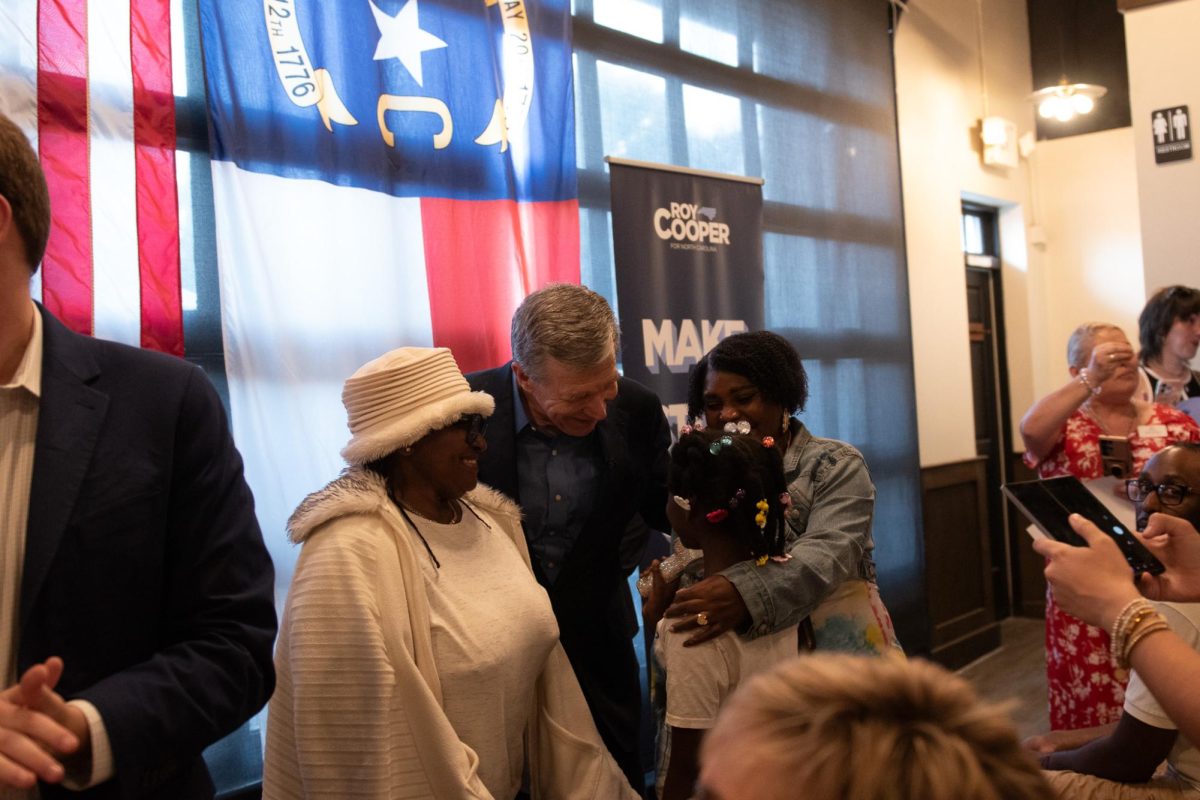
In March, we focused our coverage on high-stakes political races in North Carolina. Edelman covered the Senate election primary, which pits former Gov. Roy Cooper (D) against Michael Whatley (R), former chair of the Republican National Committee. Adams wrote about the contentious State Senate District 26 Republican Primary between Rockingham County Sheriff Sam Page and longtime Senate leader Phil Berger, which Berger eventually lost in a shocking defeat.
Costantino reported on the effects of the continued freeze in legal aid funding for North Carolina law firms, which is decreasing their ability to adjudicate cases, especially in rural areas. Costantino also interviewed Winston-Salem Mayor Allen Joines about the City Council’s long-term plans to improve the city.
Rounding out our coverage for the year, Darke investigated existing voter ID policies in North Carolina and how the proposed Safeguard American Voter Eligibility (SAVE) Act could affect these laws. Finally, Fabrycky covered a contentious town hall meeting in nearby Rural Hall, where residents voiced strong opposition to a proposed data center.
As national and state policies continue to affect Winston-Salem residents and Wake Forest University students, we hope you continue to read our coverage to stay informed. We, as students, cannot be full-time journalists, but we do hope that our stories have filled the ever-increasing gap in local coverage and shone a light on stories that might otherwise be forgotten.