

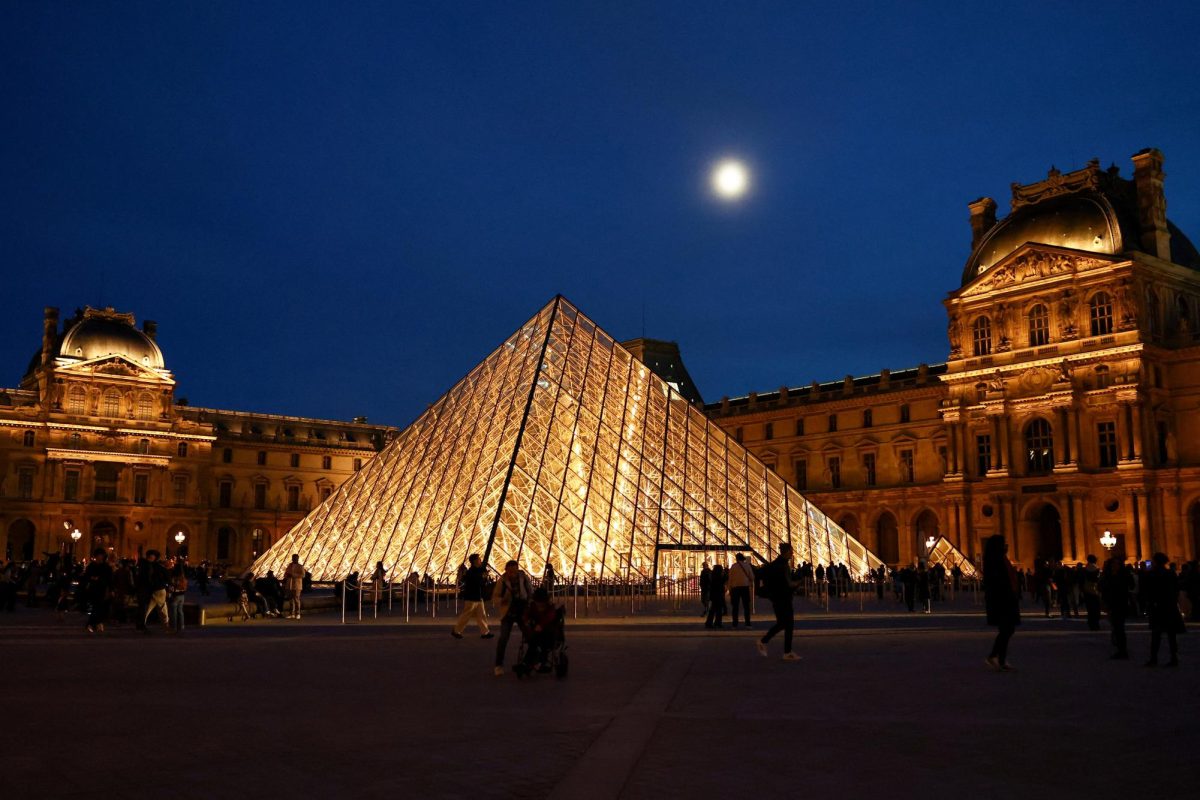

Seven minutes. One to climb the ladder to the first-floor window. One to cut through the windows and threaten the guards. Four to peruse the Gallery of Apollo and snatch the crown jewels and diamonds of generations of French royalty from its glass containers, a collection with the modest price tag of $102 million. One to walk innocently out of the Louvre and to ride away on motorcycles into the dewy Paris morning.
It took seven minutes to pull off nearly the most expensive heist of the 21st century, and seven minutes for the unknown culprits to ascend to fame.
We come to obsess over these characters because they invoke a frivolous and absurd perception of our world that is often shrouded by its more consequential shades. Oftentimes, the perpetrators embody something of “the little guy”; they miraculously defy their apparent insignificance, such as figures like Robin Hood, a criminal to the elite but a sign of justice to the poor, or Bonnie and Clyde, a loving criminal pair getting by in economic hardship.
More recently, Edward Snowden, the government whistleblower who exposed mass government surveillance, has played this role. The antics by which these anti-heroes pursue their cause are what most capture our attention.
The Louvre larceny included some notable quips that rendered it absurdly unique. The robbers were clad in bright yellow construction vests, somehow so apparent yet invisible, with one even wearing a motorcycle helmet. Conveniently, the closed-circuit TV (CCTV) camera responsible for the Gallery of Apollo was facing the wrong way. The theft occurred in broad daylight, a sign of incompetence from the culprits. It is thought, too, that the robbers forgot to take the crown of Empress Eugenie on the way out. And now, thousands of tourists have flocked to see the broken window and empty exhibits that remain from the heist.
Immediately, the internet was taken by storm. German freight company Böcker Maschinenwerke GmbH, whose lift hoisted the men into the Louvre, responded on social media with a stinging slogan best translated as, “when something needs to be done quickly.” With Halloween right around the corner, hundreds have flaunted their newest costumes on TikTok: bright-yellow vests and shining jewelry. The movie comparisons and spoofs have been endless, pinning the crime on Danny Ocean and his gang, or suggesting the ease of the theft was a mere stunt for the upcoming “Now You See Me: Now You Don’t.”
There is an unmistakable need, now more than ever, to embrace such absurdity. While we should always remain sympathetic to the museum and those who appreciated the jewelry as harborers of French history, it’s also within our humanity to respond with curious awe.
Andrew Carnegie noted, “There is little success where there is little laughter.” In order to move on and progress from any event, we must recognize it first, and laughter is the most humble recognition. From it, we are drawn to our most vulnerable state, being able to account for mistakes and articulate the things that must improve, from the direction of CCTV cameras to the urgency of police response.
In the meantime, we can enjoy our bread and circuses and remain entertained, reminding ourselves that we live in an imperfect world that, through our collective understanding of each other’s humanity, we can slowly perfect.