

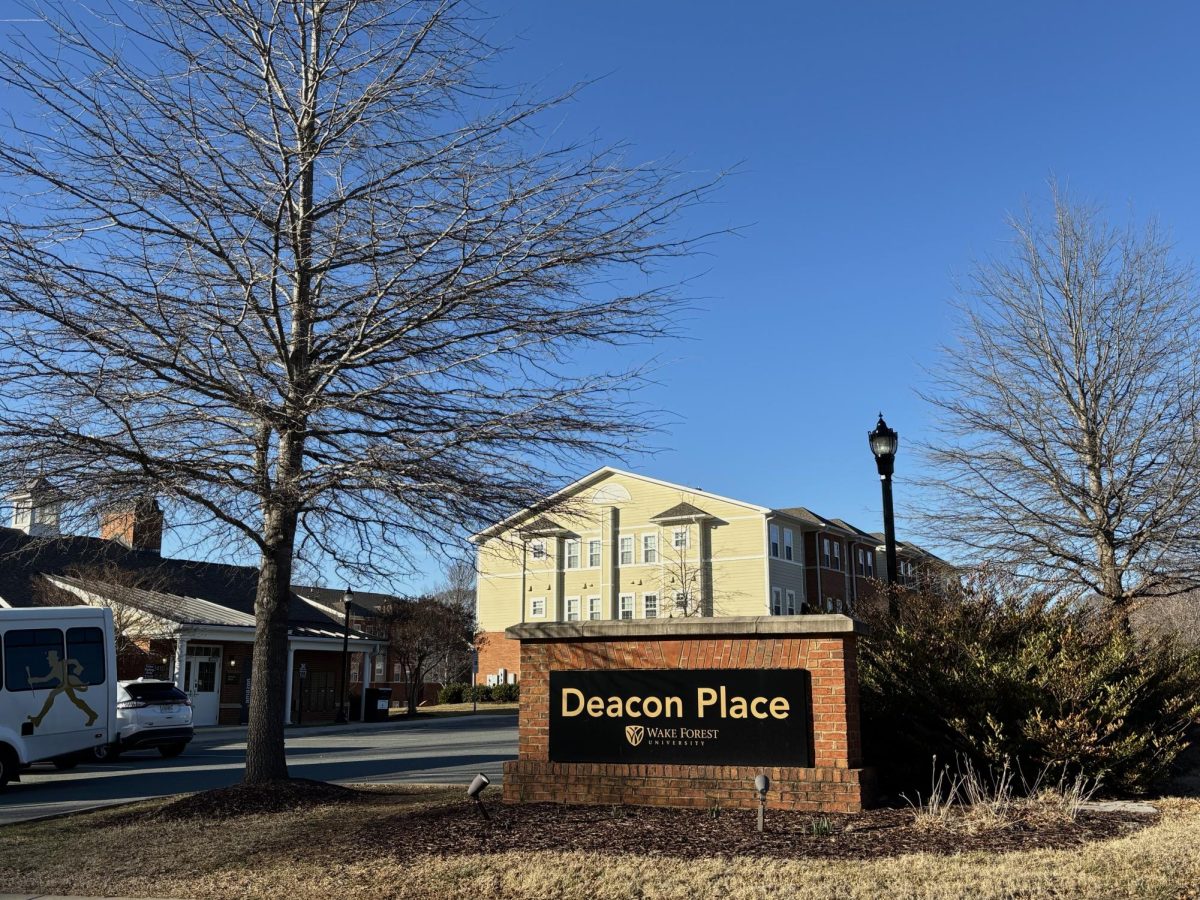
Fewer than 75 of the more than 375 rising seniors who expressed a desire to live on campus next year will not receive on-campus housing, according to Wake Forest Residence Life & Housing (Res Life). Students who were unsuccessful in the housing lottery were placed on a Return to Campus Waitlist and encouraged to find off-campus accommodations in the meantime.
“At this time, we are unable to offer you on-campus housing for the upcoming academic year due to limited availability,” Res Life wrote in a Feb. 12 email to rising seniors who did not receive housing. “We understand that this news may feel disappointing or disruptive, and we want to support you as you plan your next steps. Your housing status will be updated to off-campus, and we encourage you to begin exploring off-campus options to ensure you have a comfortable and timely arrangement in place for 2026–27.”
On Dec. 15, Res Life announced significant changes to the housing registration process for the 2026-2027 academic year. Due to limited housing availability, rising seniors (students with five or more housing credits) will register last for housing, meaning sophomores and juniors will have registration priority.
On Feb. 6, the office notified students that they would organize an on-campus housing lottery for these students due to insufficient housing inventory.
While Res Life said they cannot directly secure off-campus housing for students, they highlighted their partnership with College Pads, a platform that advertises off-campus housing. The university also held an off-campus housing fair on Tuesday, Feb. 17, to connect students with landlords of off-campus housing units.
Students express concerns about on-campus housing lottery results
Students who were not granted on-campus housing expressed disappointment and frustration at Res Life’s decisions.
Evelyn Shatto, a rising senior who did not receive on-campus housing, said she was surprised and upset by the policy changes.
“I was disappointed that Wake Forest could not uphold their commitment to four years of on-campus housing that was agreed upon at admission my freshman year, and anxious that I would now have to find off-campus housing in a short time frame,” Shatto said. “I was also disappointed and a little frustrated that I would be one of the students facing the consequences of choices I had no control over, meaning the University’s choice to increase enrollment without ensuring adequate housing for the incoming students, in addition to current students.”
Junior Karina Acevedo Prats also did not receive on-campus housing for her senior year.
“I truly did not know what I was going to do,” Acevedo Prats said. “Most students who plan to live off-campus begin leasing houses as early as their sophomore year, so I felt like I was already behind.”
She continued: “Fortunately, I was able to find an apartment nearby, but I know many students who are still searching for housing and are struggling to afford the limited options available, which has been an overwhelming experience for many of us.”
An unfulfilled expectation
“Historically, Residence Life and Housing has accommodated most seniors who wished to remain on campus,” they said in a statement. “However, circumstances have shifted in recent years, and we have communicated transparently that our capacity to house students who have completed the residency requirement would be more constrained.”
That shift marks a notable change from the expectations some students once had. When deciding to enroll at Wake Forest, many students, including Shatto, were attracted by the university’s previous commitment to provide four years of on-campus housing.
“I wanted to feel connected to the community, and I wanted a campus that could do that, compared to other universities that do not have a defined campus,” Shatto said.
Believing that Wake Forest would guarantee her housing for her entire college career provided Shatto with security and confidence in her enrollment decision.
“Regardless of whether I would decide to move off campus or not, having that opportunity to choose taken away is disappointing,” Shatto said.
Acevedo Prats also said that the expectation of housing all four years played a large role in her decision to attend the university.
“That expectation was something my parents and I took into serious consideration when deciding where I would attend college,” she said. “Having that choice change midway through my time here has been difficult, and knowing this earlier on would’ve prepared my parents and me for this whole process. I would’ve probably signed a lease my sophomore year when everyone else does it, if I knew that this was going to happen.”
Junior Sally Kwak had previously planned to live on campus her senior year but decided to start looking for off-campus housing following Res Life’s Dec. 15 announcement.
“My suitemates and I had always planned on living on campus,” Kwak said. “It was a part of the merit scholarships some of us had, where the scholarship was contingent on us living on campus for four years. It was something many of us had understood to be true since before stepping on campus – that we’d always have housing.”
A shift in campus culture
Many students feel that Res Life’s lottery timeline did not provide students with an adequate amount of time to find optimal off-campus housing accommodations. In addition, some students believe the insufficient housing availability on campus reflects changes to the overall Wake Forest campus culture as the university prioritizes expanding the student body.
Like Kwak, junior Grace Jones intended to live on campus, but decided to explore off-campus options after learning that Deacon Place, a residential apartment complex on Long Drive, would not be able to accommodate all rising seniors who desired to live there.
“I definitely think that the changes to the housing process have decreased the trust that students have in the school,” Jones said. “The over admittance of students in the past few years has had a great deal of negative effects on campus in the lack of housing availability and in other areas such as limited seats in classes and clubs. It seems like Wake is prioritizing administrative goals over actual students.”
Support from Residence Life & Housing
Res Life said they recognize that the results of the housing lottery may cause distress in students who did not receive on-campus housing.
“We understand that seniors who were not granted on-campus housing may feel stress, particularly given the timing of the off-campus housing market,” Residence Life & Housing said in a statement to the Old Gold & Black. “Housing plays an important role in students’ sense of stability and belonging, and we recognize that this outcome may feel disappointing or personal.”
Some of the students who were not granted on-campus housing do not own personal vehicles and may find it difficult to get to campus. Res Life suggested students without vehicles consider off-campus housing served by the Wake Line shuttle. The office said they will remain in close communication with Parking & Transportation to evaluate routes for potential modifications as off-campus student concentrations become clearer.
In addition, some students have expressed concern that living off campus may affect their financial aid package. WFRLH advised students to contact Financial Aid to understand how moving off campus could change their financial aid packages and to reach out to CARE Case Management for assistance with immediate expenses such as housing application fees.
Moving forward
Res Life said they will keep students informed about changing housing availability on campus. The office added that it understands student frustration and is committed to providing continued support.
“Even with advanced communication, we recognize that outcomes can feel unexpected or upsetting,” Res Life said. “Our responsibility now is to move forward with transparency and care — listening to student concerns, improving how we communicate expectations and supporting seniors throughout the housing process.”
Some students said they believe clearer and more proactive communication from Res Life would help prevent similar frustrations in the future.
“I would like to see more transparency and clarity about housing expectations moving forward,” Acevedo Prats said.
Shatto echoed that sentiment, adding that long-term planning should accompany enrollment growth.
“I would appreciate a reevaluation of the system that could work towards preventing this situation for future students. I understand it is a difficult position because there is just not enough space to accommodate everyone; however, issues regarding space and accommodation should have been resolved prior to admitting even more students,” Shatto said.


