

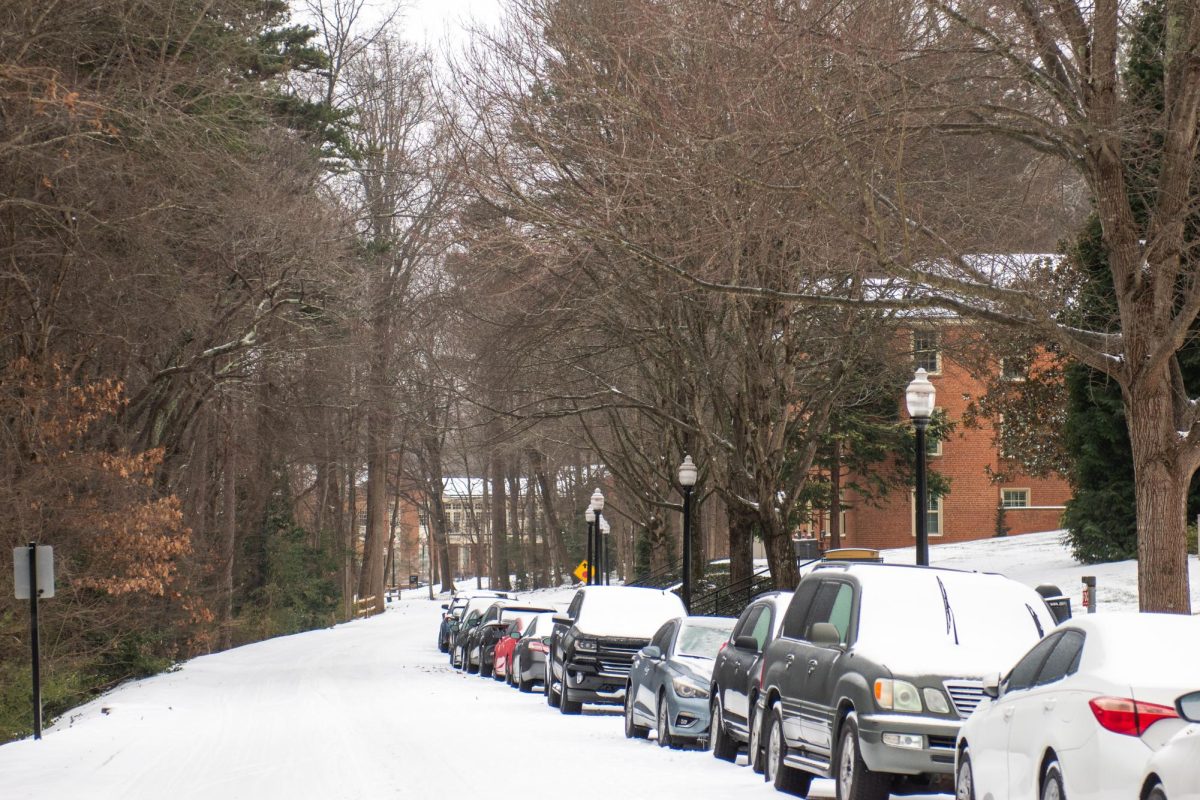
As Winston-Salem thaws from a historic winter and in-person classes are back in full swing on Wake Forest’s campus, the two weeks of inclement weather back in January may feel like a distant memory. For many Winston-Salem business owners and families, however, the back-to-back storms were difficult and carried lasting consequences.
Winston-Salem/Forsyth County Schools cancelled in-person classes for multiple days, opting for remote learning to prioritize student safety. Many businesses also faced difficult decisions.
NASCAR’s Cook Out Clash, for example, which attracted about 15,000 visitors in 2025, was expected to draw crowds to Winston-Salem again this January. Instead, the event was postponed to Feb. 4 amid accumulating snow and icy roads. This left local companies without their anticipated influx of customers during a time when business in Winston-Salem is already low.
Tommy Priest, owner of Coffee Park Airstream, told WUNC news that the winter weather hurt many small businesses.
“If we get anything big in town, we see spillover all across the spectrum,” Priest said. “The restaurants pack up, the hotels, the beer shops definitely pack up – especially with the Clash. It’s just a big hit.”
Another business that faced challenges was local Studio Aware Hot Yoga. Owner Nicolette Kourpias said the studio closed for two days and operated on a modified schedule afterward to prioritize safety for both instructors and members.
“The recent snowfall was beautiful, but it also made things stressful for small businesses like Aware,” Kourpias said. Having grown up in Maryland, she said she used to view winter storms as routine.
“We played in it, drove in it and life carried on,” Kourpias said. “My mom grew up in Nebraska and still talks about walking to school through blizzards. But Winston-Salem is different. We don’t have the same snow removal resources, and many people aren’t used to driving in those conditions, which can make it unsafe.”
She continued: “We’re in the business of stress relief, so not being able to open our doors — when people needed it most – was incredibly hard. But the reality is, even our team was impacted – two of our instructors couldn’t leave their driveways for over a week. Ultimately, our responsibility is to support wellbeing, and that includes making decisions that keep both our members and team safe.”
The snow may have lasted only days, but even brief closures and postponements led to real economic and personal costs for many.
As spring approaches, the city is hopeful that warmer weather will bring renewed foot traffic and spending. For students and residents alike, the return to normalcy presents an opportunity to show up and support our community.