

Technological proficiency is increasingly valued in academia and the job market, but many students and faculty are unaware of Wake Forest’s wealth of digital resources. This visibility gap led the university’s Information Systems team to create a new digital pedagogy studio this semester.
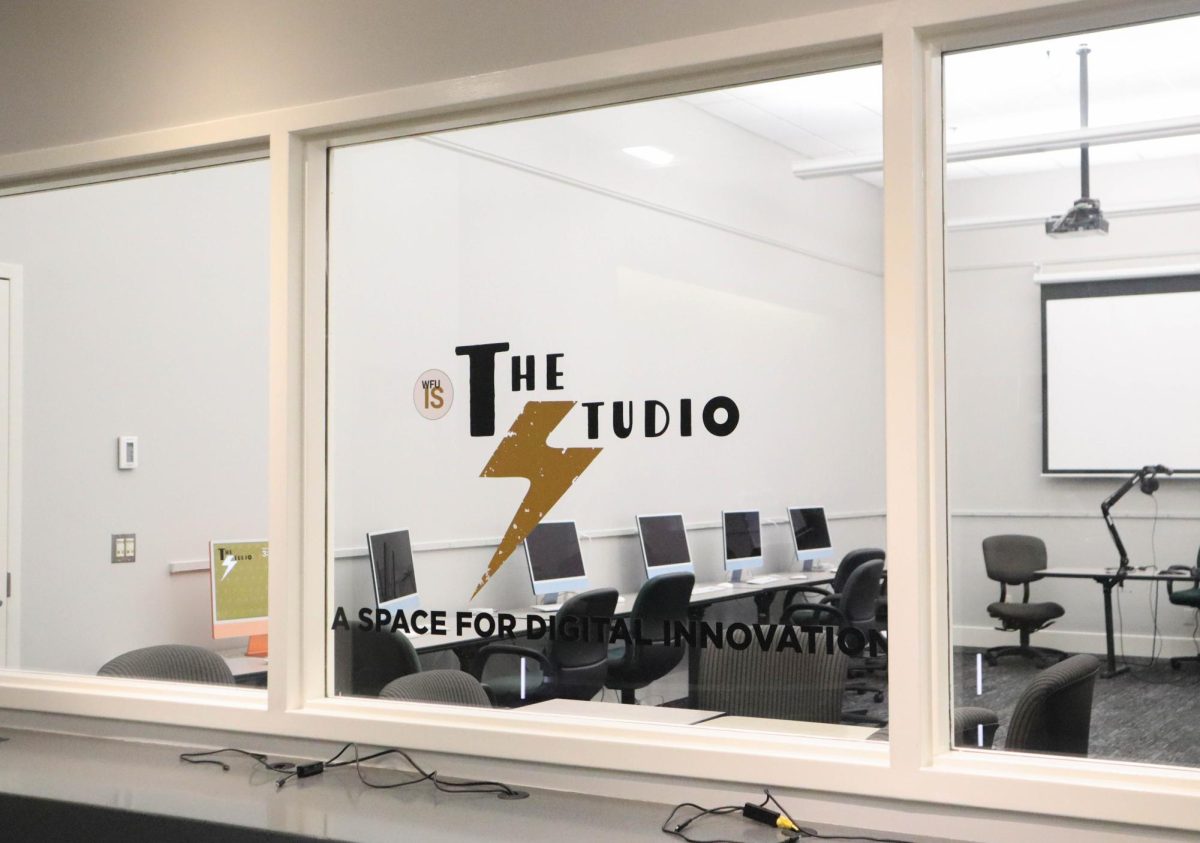
“The Studio,” a bright room filled with equipment and tucked beside the Bridge on the second floor of the Z. Smith Reynolds library, will serve as a centralized hub for digital projects, workshops and creative collaboration.
“This has been a dream come true after many years,” Brianna Healey, assistant director of academic technology for Information Systems and managing director of the Studio, said.
The Studio was developed by a community interest group of faculty, staff, and students who expressed the need for a collaborative, visible location that consolidates digital resources and support.
Meredith Farmer, English professor and faculty director of The Studio, also played a key role in establishing the space. Farmer frequently leads public-facing digital history projects incorporating podcasts, documentaries and multimedia storytelling. She brings her expertise to the Studio to help others engage in similar work.
“There are all these amazing hidden resources,” Farmer said. “The problem is less that Wake Forest doesn’t provide things, and more that there are visibility problems.”
Rather than serving a single department, The Studio will welcome students, faculty and staff from all corners of campus. For example, the initiative is partnering with the Office of Personal and Career Development, Marketing and Advertising Club and the Student Technology Advising Committee to help students create digital portfolios supplementing their resumes through twice-monthly workshops.
“This is a campus-wide resource,” Healey said.“This is not just for the College of Arts and Sciences. This is for everyone.”
Faculty interest in alternative forms of assessment also contributed to The Studio’s development, as some are turning away from traditional essays and blue book exams in favor of more innovative projects.
“There’s a real desire to come up with different assignments, different practices, different forms of assessment,” Farmer said.
The Studio assists students working on such digital projects, helping them develop skills they may not encounter in standard coursework.
“Now there’s a space where, if a student is supposed to do audio editing for a podcast and they’re like, ‘What do I do?’ they can come in and get one-on-one support,” Farmer said.
Healey emphasized that the shift toward digital and multimodal learning reflects broader changes in education and the workplace.
“We live in a world that’s thinking digitally and multimodally,” Healey said. “Regardless of discipline, students need these skill sets.”
By bringing together technology, creativity and community under one roof, The Studio will help community members adapt and thrive in a 21st-century world.


