
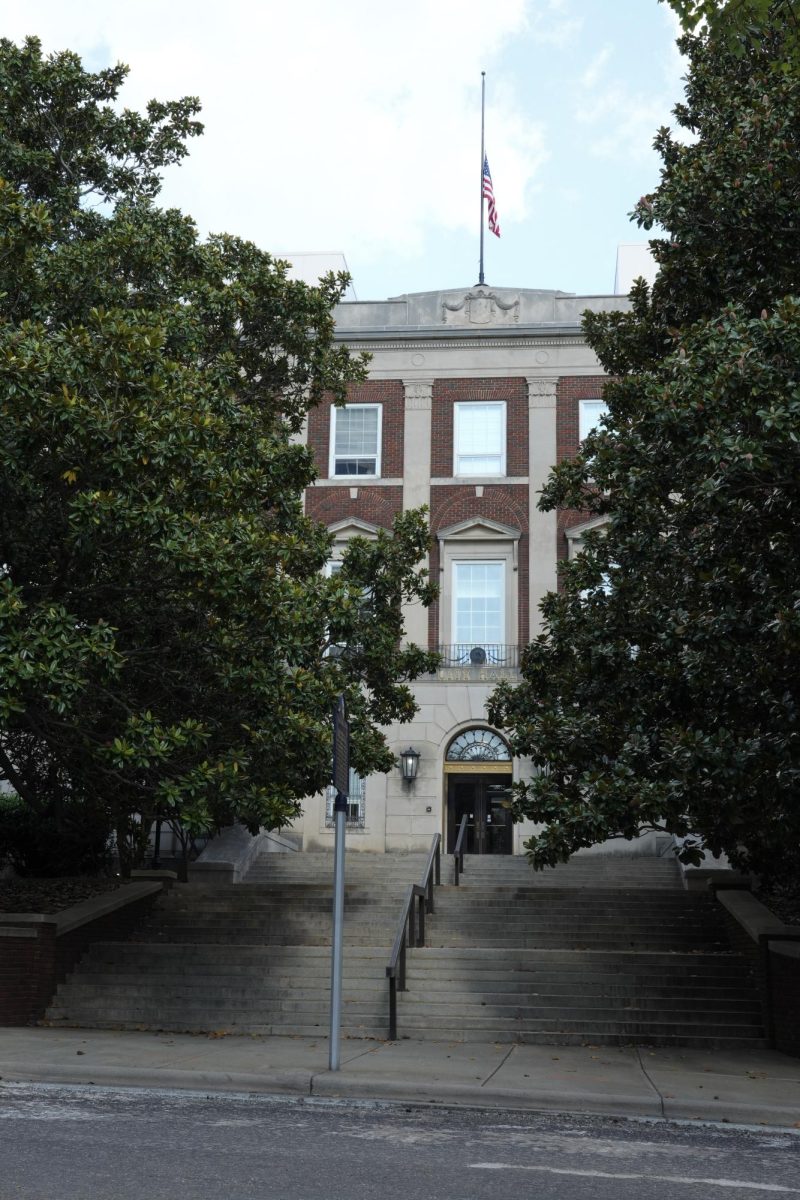
The Winston-Salem City Council met at the Graylyn Estate on January 14 and 15 to discuss long-term plans for the city and ways to collaborate with other departments of the city government, such as the Police Department and the Transit Authority.
The council meets at this special retreat once a year to take a deeper look at issues that they cannot fully address during regular council meetings. The gathering also allows for team building among the council members and their staff.
“One of the key benefits of retreats such as this is that Council members get to know one another better, which helps strengthen working relationships,” Beth Hundley, assistant to the city manager, said. “Stronger working relationships mean more gets done for the citizens of Winston-Salem.”
Affordable housing and transportation are key goals, says Mayor Joines
In an interview with the Old Gold & Black, Mayor Allen Joines spoke to the importance of the retreat for taking a step back from day-to-day governance to look at overarching projects that can improve the lives of Winston-Salem residents.
One such topic of discussion was constructing more affordable housing units.
“One of the key things on our radar right now, and I think most cities across the country, is affordable housing,” Joines said. “We had a housing needs study done, about five years ago, saying we needed about 16,000 new affordable units here in the city over the next 10 years. And so we’ve put together a pretty aggressive plan to begin working on that.”
“I think we’ve done probably close to 5,000 units already, but we’ve got a long way to go, and we’re getting tight on money, so we had to talk about ways to accomplish our goal with the limited resources that we have within the city,” Joines continued. “And one of those things that we’ve decided to put together was our own local housing trust fund, made up of private sector contributions. We feel like that would be a good way for us to begin addressing the affordable housing issue.”
Joines also spoke on Winston-Salem’s public transportation system. He explained that the city’s current bus infrastructure can be inefficient, as it requires passengers to go all the way to the Clark Campbell Multimodal Transportation Center downtown to switch lines.
“I’ve been advocating for more across-town routes, so that if you’re going from, let’s say, Buena Vista… to Hanes Mall, you could go straight over there without having to come downtown,” Joines said. “I believe it will help our ridership, make it more efficient and cut down the time that an individual has to spend on the bus to get from point A to point B. It’ll cost us some money because we’ll have to add additional buses. But City Council endorsed it in general and [I’m] looking forward to getting more details on that.”
Finally, Joines touched on homelessness in Winston-Salem.
“Homelessness is an issue that’s on a lot of people’s minds,” Joines said, adding that the city continues to feel the repercussions of the pandemic. “We’ve made good progress in addressing our homeless situation. I created a ten-year plan to end chronic homelessness, probably about 15 years ago, and we were able to reduce chronic homelessness, which means that a person had been homeless for over a year, by 92%.”
Joines said his team looks for creative solutions to address residents’ housing needs.
“We talked about ways to address the immediate homeless situation in terms of providing housing opportunities for the homeless,” he said. “We’re trying to look at some ways to do immediate housing, and then more long-term programs to help individuals get more self-sustaining.”
Council member Scott Andree-Brown echoed these sentiments.
“We need to find a compassionate solution to moving our unhoused neighbors to permanent housing,” Andree-Brown said. “While we continue our work on affordable housing, we are exploring a community program to support the unhoused. This initiative will be a housing and services hub that will focus on the whole person. This will be an opportunity for our local governments and private organizations to partner together to lift up our neighbors.”
Planning for the future
Once the retreat is over, the city government staff develop a detailed action plan for each topic discussed. For example, the city will implement two cross-town bus routes with the Transit Authority within the next few months.
That work isn’t always easy. Council Member Annette Scippio said it can be difficult to run a government that often relies on older facilities and systems.
“[There were] lots of discussions on keeping the city current in times, filled with dynamic technology advances, providing workspaces within too many aging facilities [and] maintaining quality employees within highly competitive municipal careers, while having one major source of income – taxes,” Scippio said. “It’s like running a race with shackles.”
Looking to the future of Winston-Salem, Joines said he is concerned by state initiatives that may restrict the city’s ability to assess property taxes, which are the municipal government’s main source of revenue.
“The state of North Carolina has put together a task force that’s been looking at property taxes,” he said. “I’m very fearful that they may do something that would limit our ability to create our own property tax rate. And that’s the basic source of revenue for cities in North Carolina. That’s the only thing we can do anything about.”
Joines added that he is looking forward to meeting the next president of Wake Forest and continuing partnerships between the city and the university.
“President Wente is retiring a little later on this year, and so we’re going to be anxious to see who the new president is and re-establish a strong relationship with that person,” he said. “But I think we’re very fortunate to have a positive working relationship on both sides of the equation.”