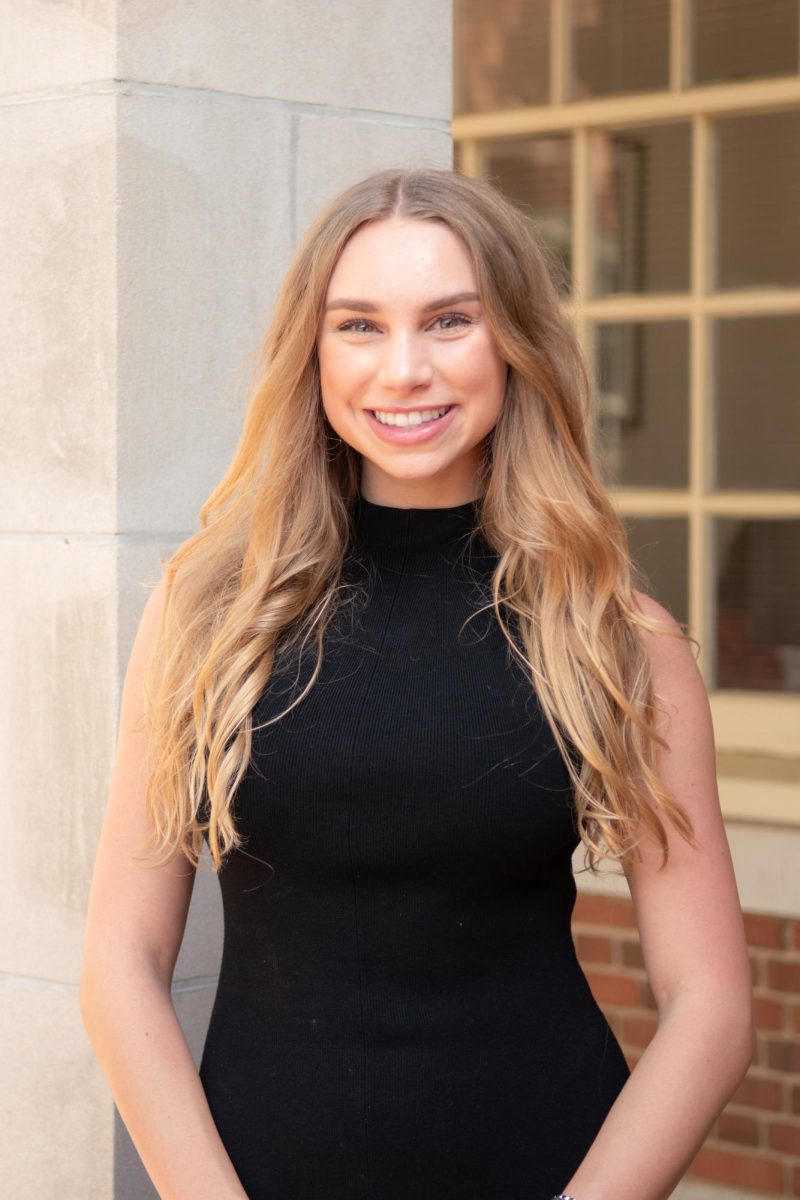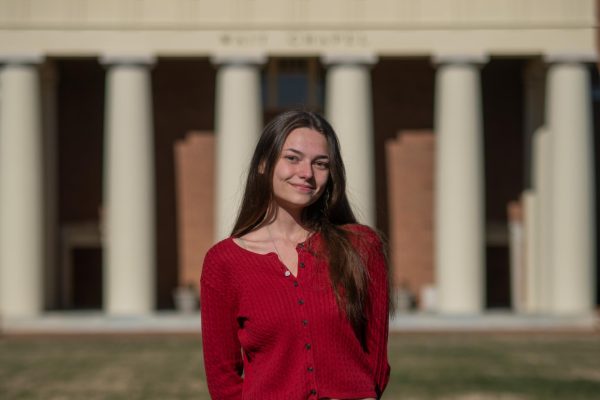


Amy Sepucha said mathematics has always played a significant role in shaping her identity.
“For as long as I can remember, it’s always been my favorite subject,” Sepucha said. “I always used to say it’s in my blood, because my mom and grandmother both majored in math in college.”
At Wake Forest, Sepucha found her place in applied mathematics, a field that let her use numbers and theories to tackle contemporary issues.
“I liked that it was applying math to real-world problems and using math to actually try to improve the world around us rather than just thinking in the theory of things,” Sepucha said.
That mindset carried into her research. Last summer, she participated in a URECA Summer Research Fellowship with her faculty advisor and has continued the project this year as her senior thesis. Their work uses mathematical modeling to better understand landscape erosion.
“We have an experimental model where we have fluid flowing over a bed of sand, and then we’re trying to use the models that we have to match it to the experiments and compare the data that we have,” Sepucha explained. “Hopefully, we can create a model that can actually be used in the real world to look at different landscapes on different inclines and different things like that to predict erosion rates and maybe how to minimize erosion or help the environment.”
Sepucha’s appreciation for applied mathematics has also shaped her post-graduation plans. She will be working as a technical solutions engineer at Epic, an electronic health records software company. At Epic, she will blend her analytical background with the challenge of improving medical software systems.
“Once the software is implemented with our customers, then I’ll be working with them to help them improve it, update it [and] help them work with the software developers—tailor the code to be what they need,” Sepucha said. “[It’s] more on the software side of things.”
The job, Sepucha emphasized, aligns with her major and her interests as well as her career goals.
“I have always been interested in the healthcare space,” she said. “Both my parents worked in healthcare or adjacent to healthcare, and so I was always interested in being able to use my job to help people and trying to help benefit this major system in our country.”
Looking back, Sepucha says her research experience has been one of the most affirming parts of her academic journey.
“Getting to do this research project has been really special because it has really solidified [that] we can do really important things with math,” Sepucha said. “Getting involved with that is pretty cool.”
Sepucha also shared advice for new mathematics majors. She recommends developing good time management habits, starting work early and reaching out for help when needed.
“Use your resources—go to office hours, use the math and stats center,” Sepucha said. “There’s a ton of resources available to math students, so take advantage of the resources.”
Moving forward, Sepucha feels ready to face her future and use the tools and skills she has developed during her time at Wake Forest.
“It’s definitely daunting, but I feel like I have learned a lot about myself and navigating the world that I feel confident that it’ll be a good transition,” Sepucha said.