

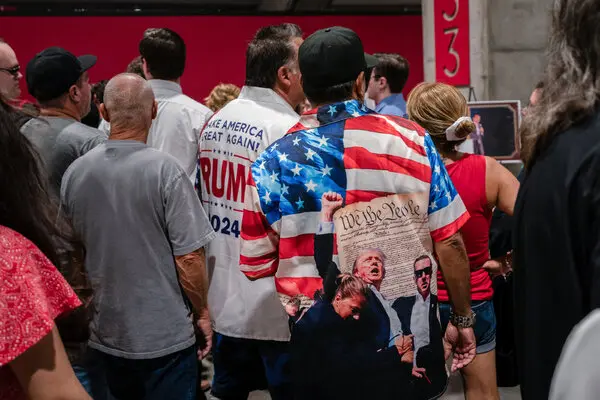
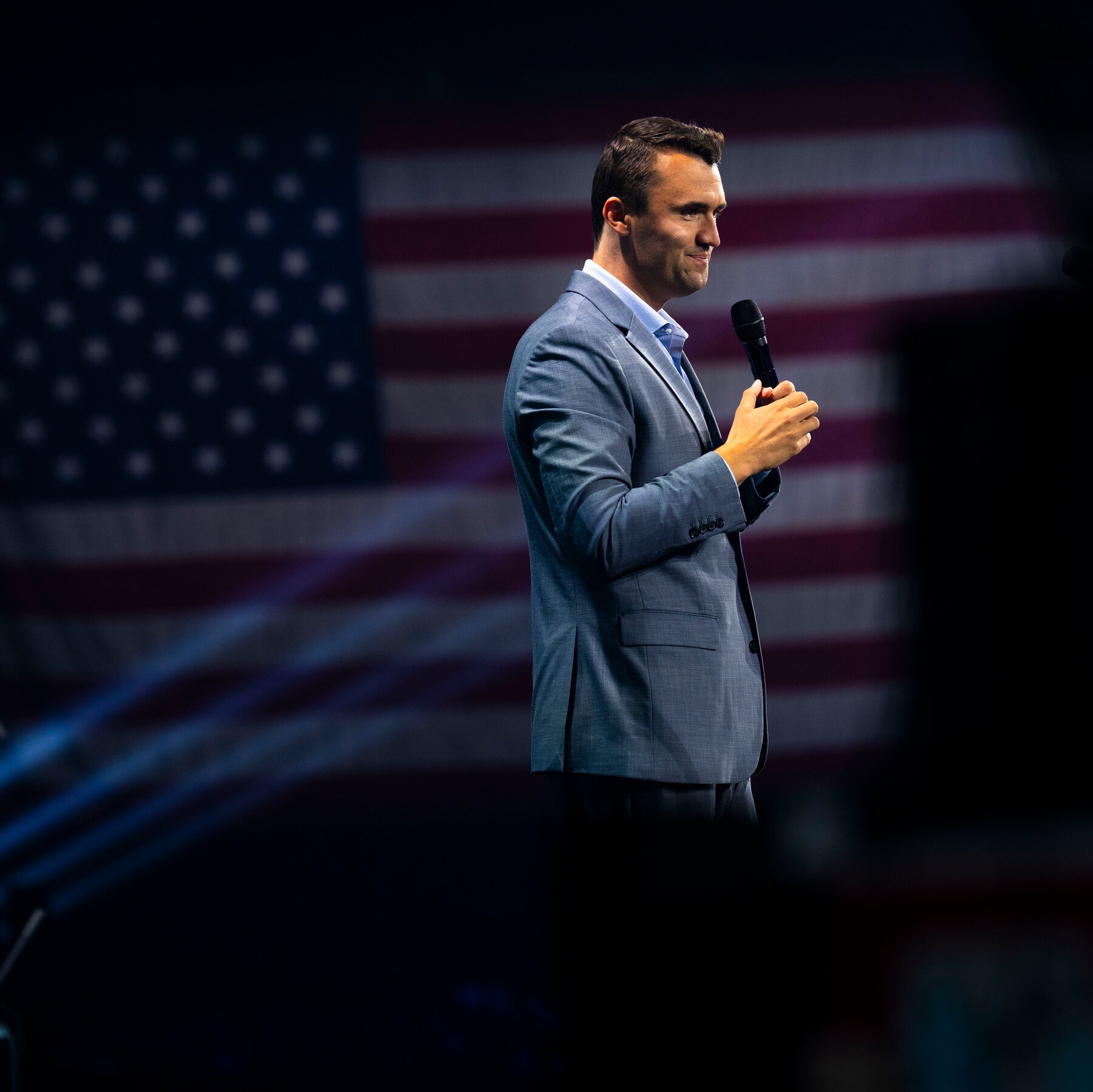
On September 10th, Charlie Kirk, a right-wing political activist, traveled to Utah to debate students at Utah Valley University. While Kirk was taking questions from an audience member about gun violence, he was shot in the neck and killed.
Kirk was known for traveling to schools in the U.S. to debate students about his conservative viewpoints. He was critical of abortion, gay and transgender rights, the Civil Rights Act and the restriction of gun rights.
I believe Kirk’s death is a tragedy. Kirk’s death illustrates a broader issue of gun violence that has affected people all over America.
No matter how these deaths occurred, there is one thing they have in common: access to guns. Today, federal laws set minimum standards, such as prohibiting firearm sales to felons and requiring background checks to purchase a gun. However, many important restrictions are determined at both state and local levels. For instance, some states ban certain types of firearms, while other states have no bans on firearms. Similarly, some states require permits to purchase or carry firearms, while most states do not.
Furthermore, the types of guns that are available to citizens vary from state to state. Most states permit the purchase of ordinary firearms like pistols, revolvers, rifles, and shotguns. In addition, most states allow citizens to purchase assault rifles, but some states, such as California, Connecticut, Hawaii, Maryland, Massachusetts, New Jersey, and New York, prohibit them. This disparity in gun laws among states has allowed for the widespread gun violence in the U.S. that is prevalent today. With stricter federal laws over gun availability, the purchase of guns can be decreased, and with it, the number of deaths resulting from gun violence.
The further restriction of gun availability in the United States has been highly contested because of the Second Amendment. The Second Amendment protects the right to bear arms, stating, “A well regulated Militia, being necessary to the security of a free State, the right of the people to keep and bear Arms, shall not be infringed.” This amendment is why lawmakers are reluctant to place further restrictions on gun availability.
However, throughout United States history, we have seen lawmakers interpret the Constitution loosely. For instance, Alexander Hamilton espoused a loose interpretation of the Constitution when advocating for the creation of the National Bank. During the civil rights movement, the Supreme Court’s ruling in Brown v. Board of Education interpreted the Equal Protection Clause of the Fourteenth Amendment loosely, determining that “separate” is inherently equal.
Occasional loose interpretations of the Constitution can be beneficial for the betterment of America. Without the National Bank, there would be no reliable currency and the U.S. economy would be much less stable. Similarly, the Supreme Court’s decision in Brown v. Board of Education was a landmark decision in the Civil Rights Movement.
In the same way that these past loose interpretations of the Constitution improved the U.S., the loose interpretation of the Second Amendment can also improve America. With this loose interpretation, guns can be restricted on the federal level and the deaths resulting from gun violence can be curbed. Future school shootings can be prevented, political assassinations can be stopped and fewer parents, partners and siblings will have to mourn the deaths of their loved ones. The loose interpretation of the Second Amendment is the solution to America’s gun violence epidemic.





Philip Polizotto Jr. • Nov 25, 2025 at 6:14 am
The “well-regulated militia” that 2A talks about is not presently activated but may be at a minute’s notice through statute. That is the whole point of having a citizen militia for defense and security in the first place: to have Americans armed and ready for battle when so called upon. It was the intent of the founders, and that duty hasn’t been repealed. If we actually had an activated well-regulated militia system in place, Americans would be armed, supplied, and well trained by the government for quick military action. This concept is lost in modern America but was the early-American gold standard and should return.