
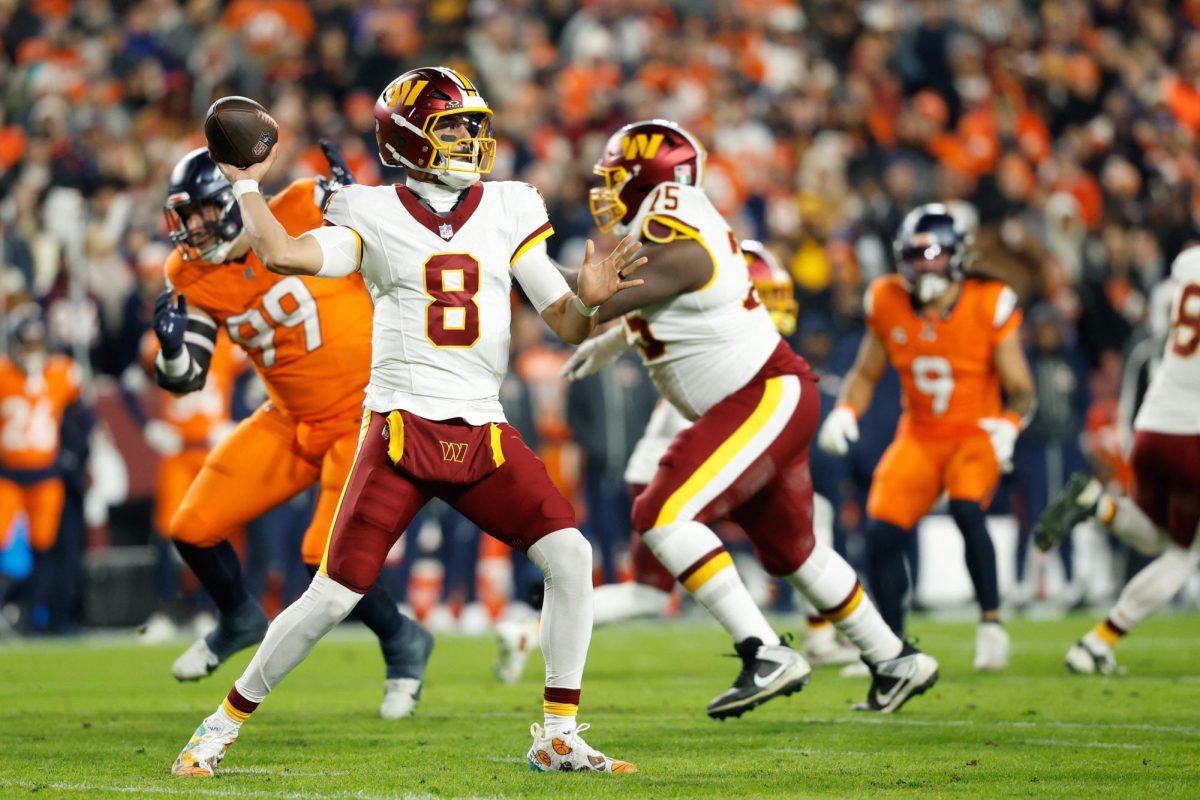
Groans and cheers resounded in unison from the stands at Northwest Stadium. In a box overlooking the field, President Donald Trump presided over a ceremony of servicemen and women at halftime of the late afternoon contest between the Commanders and Lions. Later in the game, the President joined announcers Kenny Albert and Jonathan Vilma to talk football, reflecting on Trump’s own playing days.
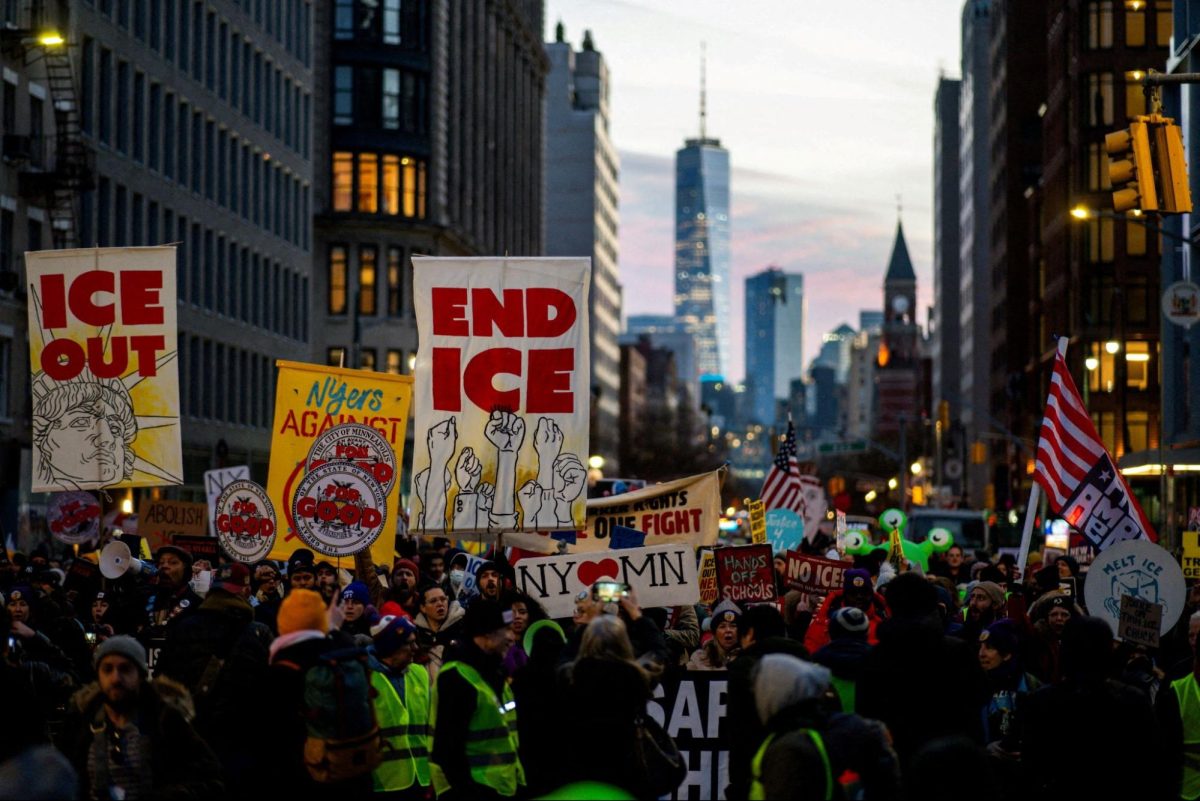
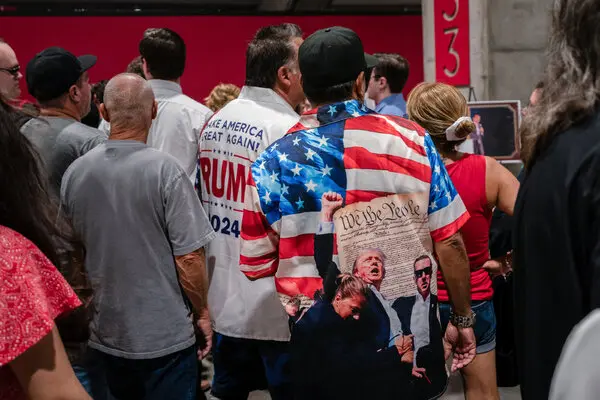
His appearance provoked polar reactions, but a familiar, persistent question arose: Should politics and sports be separate?
Since the very beginning of sport, games and government have been continually intertwined. In Ancient Rome, the supporter groups (Blues, Greens, Reds, and Whites) of chariot racing troupes evolved into political groups whose rivalries wielded significant senatorial influence. In 1971, American ping-pong players like Glenn Cowan facilitated Chinese-American relations through several competitive matches with Chinese stars.
The President’s visit to Landover is only the latest of his athletic escapades. In February, Trump attended the Daytona 500 in Florida, followed by an appearance at the NCAA Men’s Wrestling Championships in Philadelphia a month later. In July, he found himself celebrating with Chelsea F.C. at MetLife Stadium after they won the Club World Cup, an event hosted by the United States.
His consistent presence at sporting events has been marked by equally consistent commentary about the way sports have changed and have not changed. In a recent interview with ESPN staple Pat McAfee, Trump asked, “What happened to the Redskins, by the way?” Such comments are indicative of the President’s desire to influence the appearance of American sports, even mentioning recently his appeal to name the new Commander’s stadium after himself.
Historically, governments have taken significant, if not extreme, interest in bolstering their nation’s athletic prowess. Notably, in 1961, Cuba replaced professional sports with state-sanctioned athletic development that began in primary school, with elite athletes ultimately training in separate schools. The involvement of governments poses the flip side of the argument: what about the athletes?
In 2016, San Francisco 49ers Quarterback Colin Kaepernick controversially took a knee during the national anthem, protesting the racial inequality and police brutality that continue to be prevalent in the United States. He was met with immediate backlash, with many stating he was disrespecting the flag. Others, however, joined in his peaceful protest, with the common notion that such displays were “bigger than football”.
This moniker comes to define a guiding principle of politics and sports: players are people too, affected by the same inequities and policies. They, too, understand that they occupy a platform capable of immense advocacy for their beliefs. Kaepernick likely understood his protest would spark outrage, but he surely knew too that it would reach millions of people silenced by the same injustice he sought to correct. Perhaps his status even inspired others to take up the cause.
It is wrong to say that politics and sports should be entirely separate. Teams and leagues are built on the humanity of their athletes and viewers, and humanity is certainly inseparable from the actions of governments. When a viewer criticizes a player for expressing beliefs, they must always question whether their criticism stems only from the fact that it’s an athlete expressing them. The ability of athletes to participate in the political sphere must never be undermined, for the benefit of all who aspire to be those athletes and for the livelihood of those athletes themselves.
It is then the government’s role to respond to those protests instead of diminishing the legitimacy of their claims. It should never be the role of the government to impose itself on the sports it claims to uphold. When every aspect of sport surrounds the institution’s role within it, then the advocacy potential and the identity of teams and leagues become one in the same with their government. When that happens, the uniqueness of each team, the feats of each athlete, and the intricacies of every game lose their humanity.