

We are all familiar, at least to some degree, with the looming climate crisis. News outlets brim with panicked headlines screaming that we must act now. But it’s too late, many experts say: the polar ice caps are melting and there is a gaping hole in the ozone layer. We have ruined the Earth beyond repair, and you are not doing enough. So what is the point?
Many people struggle to be sustainable in a world where everything feels inconsequential. We are tiny specks of dust floating on a rock, so they say. But this rock is our home, and we have to live here, so we might as well do what we can. And the actions we take in our short time on Earth do have an impact, even if sometimes it feels like they do not. This is a difficult mindset to learn and maintain, but worthwhile.
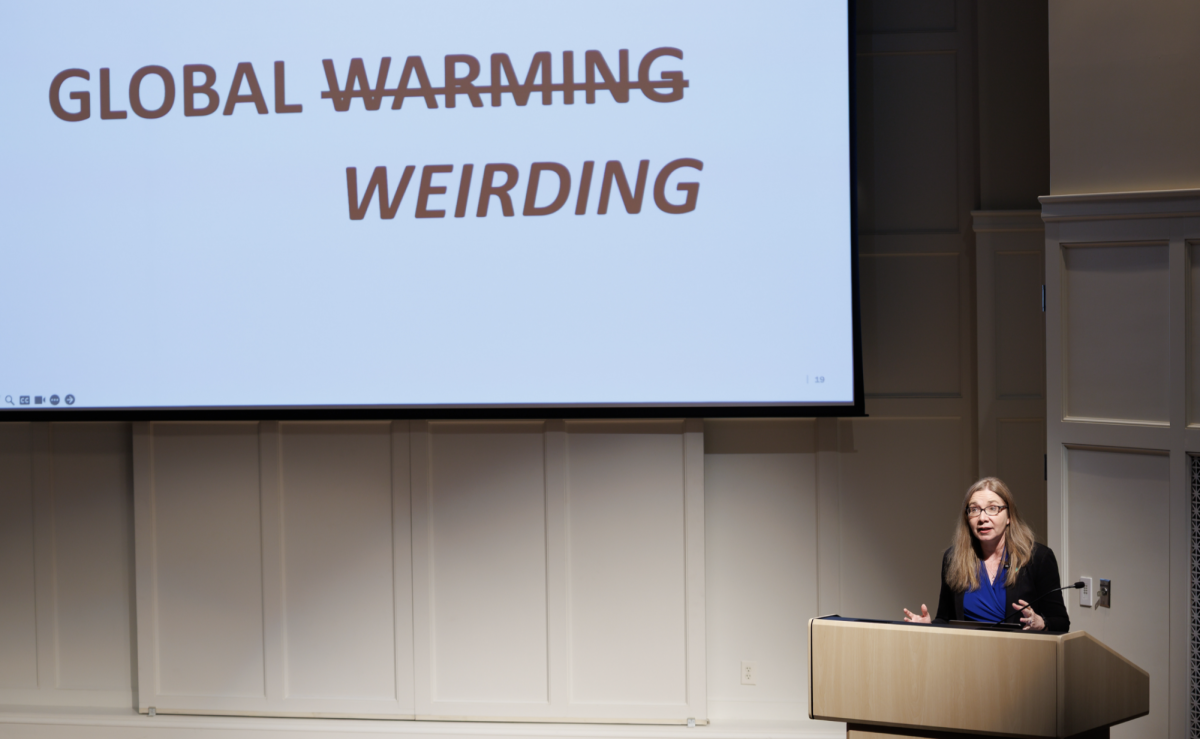
Dr. Michael Lamb, executive director of the program for leadership and character and an associate professor of interdisciplinary humanities at Wake Forest, believes that one of the most important things people can do when participating in the climate conversation is to maintain hope.
“The virtue of hope avoids both presumption and despair, which can lead to complacency and complicity,” Lamb said. “Hope encourages us to do work now so that we can make things better. We shouldn’t despair, but we also can’t just presume that what we are hoping for will happen. We have to work for it. Hope is a posture that motivates and sustains good work.”
Pessimism is all too common in environmental work; therefore, moving towards optimism may seem like the logical next step. But Lamb draws an important distinction between hope and optimism. He explains that optimism is a good practice, but hope is a more sustainable way to live and to make change happen.
“Optimism is this expectation that something good will necessarily come about in some way,” Lamb said. “It assumes that things are more likely than they might be. Hope is a much more rigorous and realistic posture that acknowledges possibility but doesn’t assume certainty or even likelihood. It requires us to grapple with reality in ways that honor the possibilities of future goods that we can actually achieve while recognizing the risks, dangers, and challenges that threaten these goods.”
It is easy to look at the reality of what we are dealing with. True strength comes from recognizing these issues and the immense effort it will take to solve them, and deciding to persevere anyway.
Lamb cited Wendell Berry, an American novelist, poet and environmental activist, as an exemplar who embodies this idea through the structures of his poetry. In A Poem on Hope, for example, Berry begins with the acknowledgement of environmental destruction and works through the reality of this problem, then ends on a more heartening note.
“He takes us through despair and gives us a vision of hope. So he starts with loss, but he often ends with hope,” Lamb said.
“Because we have not made our lives to fit; our places, the forests are ruined, the fields, eroded, the streams polluted, the mountains, overturned. Hope then to belong to your place by your own knowledge of what it is that no other place is, and by your caring for it, as you care for no other place, this knowledge cannot be taken from you by power or by wealth,” Berry wrote.
We can use this same structural concept in everyday climate conversations. Lamb explained the psychological strategy of “emotional sequencing,” in which one recognizes fears before leading into hope. This order of emotions is an effective way to validate emotions while motivating change.
Sustainability also flourishes when people are curious and caring about the work they engage in. In this way, Lamb works face-to-face with students to encourage constructive ways to approach global issues.
“I think a lot about what we need to do to cultivate and teach hope and draw on thinkers in the long tradition of character and virtue development,” Lamb said.
Lamb outlined three strategies to develop hope:
- Practice: We can develop virtues like hope by creating a habit of being hopeful in the face of adversity.
- Using exemplars as a model for leadership: We can learn virtue by imitating those who embody it, observing how they respond to issues in productive ways and then building on what they have done. Lamb cited Wendell Berry as one of the principal exemplars in this area.
- Intentional framing of environmental issues: Lamb said that many climate communications focus on generating fear to incite action, but fail to pair those appeals with direction towards solutions.
Another factor that may contribute to the air of pessimism in sustainability is the vast scope of environmental issues. We tend to see sustainability as a global issue that must be changed now and all at once. But sustainability starts small and grows as more and more people see it as a movement of many little pieces instead of an instant change. Sustainable action on a small scale does matter, so we must recognize the importance of these small-scale actions as we build a mindset of hope.
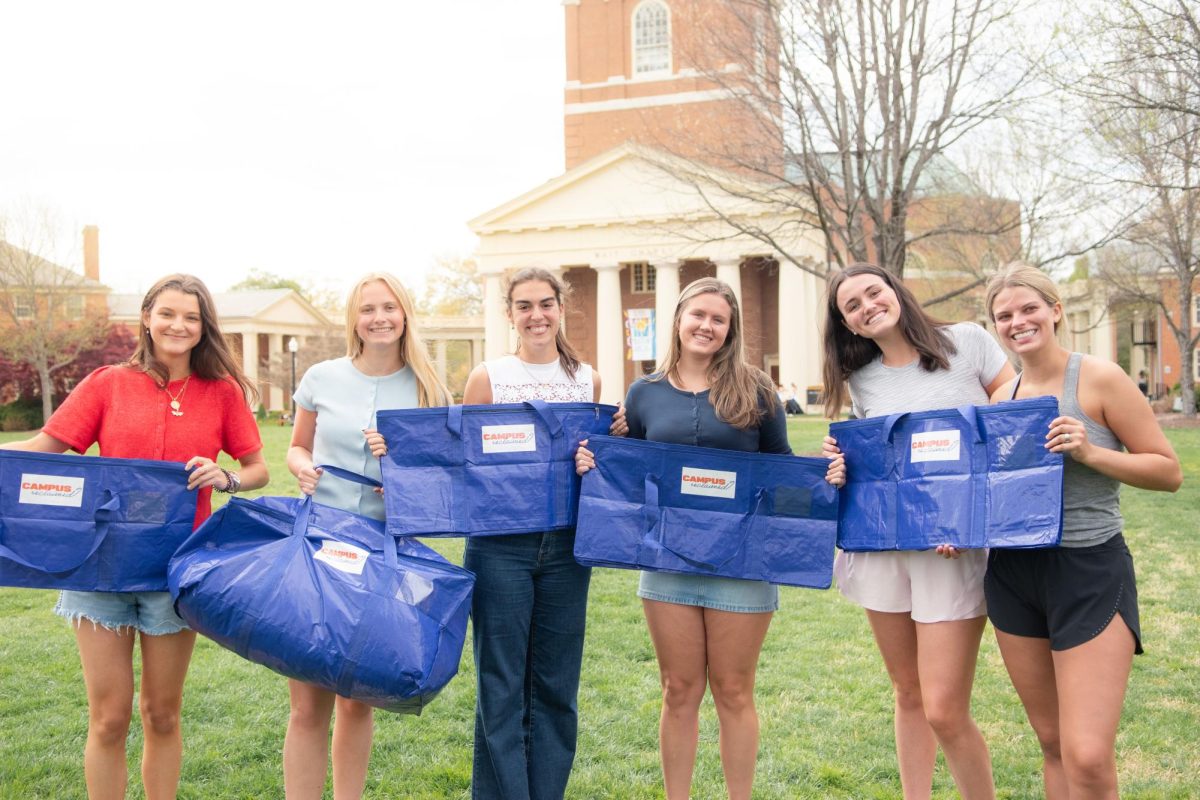
Lamb said the sustainable actions he has seen here at Wake Forest are incredibly powerful in the fight for environmental action.
“I have seen a lot of hope here at Wake Forest around sustainability issues,” Lamb said. “I have seen students in the Campus Garden engaging locally with a place in a real, tangible way, and I often see the volunteer who comes by and picks up the compost in our office every week.
He continued: “Seeing students take action in ways that sometimes can be invisible but are actually making a difference gives me hope. I really admire the work of the Office of Sustainability and the Sabin Center, and I’ve seen a lot of energy from faculty and staff who are addressing these issues through programming to raise awareness and motivate action.”
So yes, many things are going wrong in the environment. But there are also many things going right. There is a hole in the ozone layer, but it is the smallest it has been since 1986, thanks to a push for the reduction in the use of ozone-depleting substances outlined in the United Nations Environmental Programme Montreal Protocol. Cumulative action has paid off, and instances like this show us that change is possible and that environmental action is more powerful when we avoid despair and maintain hope.
“I think sustainability is not just an environmental question, but a question for institutions more holistically,” Lamb said. “We need to show the relevance of sustainability to broader challenges while also highlighting broader possibilities that might supply and sustain our hope.”