
Anna Anstey, a senior at Wake Forest studying marketing and entrepreneurship, started her own sustainable business this semester. In partnership with Wake Forest’s Center for Entrepreneurship Startup Lab, Anstey established a buyback program for students called “Campus Reclaimed”.
At the end of each semester, students can donate or sell gently used clothing items, decor and furniture to Anstey’s business, which she then lists for sale on the Campus Reclaimed website. Anstey said she was inspired to found Campus Reclaimed after talking with a member of the Wake Forest facilities team about the “outrageous” amount of trash produced during move-out.
“There is brand new stuff with tags… stuff that is barely used, going into the landfill,” Anstey said.
Anstey explained that not only does her buyback program reduce waste, but it also benefits students as a way for them to make money and purchase affordable products. She sells Zara jeans for $15, Madewell shirts for $30 and furniture such as chairs and ottomans for under $70.
“[Students] can donate or sell items on consignment so they can make money from it,” she said. “It’s also helping the university and facilities, because they are not having to deal with all of these items, and then ultimately helping the environment by trying to reduce waste.”
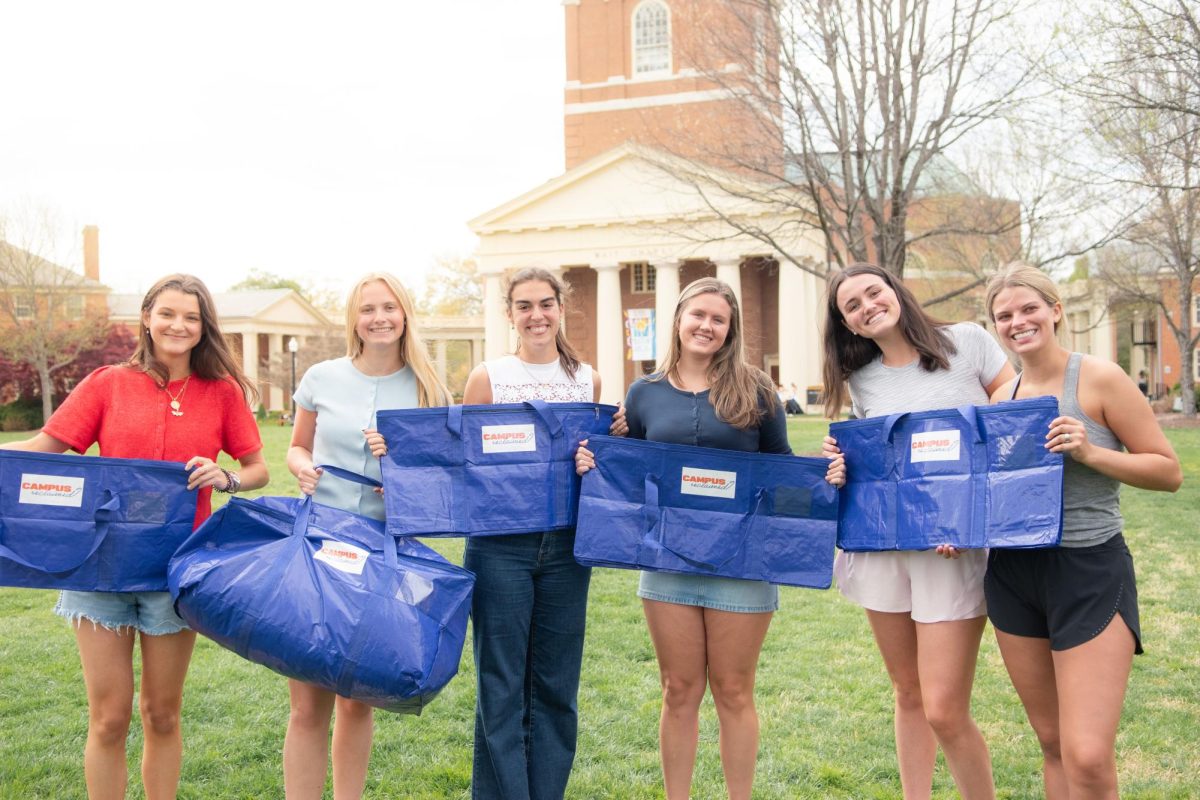
During final exam week, students can donate or sell their items at drop bins on Hearn Plaza. Alternatively, donations or sales can be made at any time by requesting a “Reclaim Tote,” which Anstey’s team picks up from students’ dorms. She sells these items online to anyone, not just Wake Forest students.
While Campus Reclaimed started as a project in the Startup Lab with the Center for Entrepreneurship, Anstey intends to continue to build her business after she graduates, expanding beyond Wake Forest’s campus.
“I am moving to Charlotte after graduation but will be pursuing Campus Reclaimed full-time,” Anstey said. “This spring, I want to have a conservative 15% adoption rate among Wake Forest students. Next year, I am targeting a 20% adoption rate at Wake Forest while expanding to three to five other North Carolina schools, such as Elon, High Point or N.C. State. Our main goal is to test out the market with private vs public schools, ACC vs SEC schools and different-sized schools.”
First and foremost, Campus Reclaimed is a student-focused business, so Anstey will invest a percentage of the profits made each year back into the host university’s sustainability office. And to encourage students to participate in Campus Reclaimed, Anstey is also offering a raffle entry, where each item donated or sold is worth one entry. The winning prize is $500.
Mary Kate McDuffee, a first-year student studying economics at Wake Forest, participated in the buyback program and shared her experience.
“Campus Reclaimed made it super easy for me to donate my previous headboard and get a new one for next year,” she said. “I’m so glad my previous headboard was able to go to a new home and [that I was] able to recycle something instead of wasting it.”
Catie Oakley, a senior studying politics and international affairs, has also participated in Campus Reclaimed and reflected on her choice to donate items.
“I donated my items because I realized over the tenure of my time here, I have collected a lot of things that may not have any purpose for me in postgrad anymore, but definitely still have life left in them for the next generation of Wake students,” she said. “I am much more content thinking that my things will go on to have another life with someone else at Wake instead of merely throwing them away.”
So rather than throwing out the items that you cannot transport back home or simply do not want to keep, consider making a donation (or some money) by bringing items to the Campus Reclaimed collection bins during move-out this year. Campus Reclaimed is showing that sustainable businesses can be eco-friendly and student-forward, which is truly a win-win.