

As the air warmed and the first buds of the season began to show, the Wake Forest community gathered at the Campus Garden on March 22 to celebrate the annual Spring Equinox Festival.
Erin Hamilton, assistant director for sustainability strategy in the Wake Forest Office of Sustainability, said the event offered vibrant opportunities for students to connect with nature.
“We are hoping that everyone comes out to celebrate the start of spring and experience moments of connection with nature and one another through hands-on activities, a tree planting and tours of the garden,” Hamilton said.
Founded in 2009, the Campus Garden offers opportunities for students, staff and faculty to enjoy hands-on experiences like volunteering and research. The Office of Sustainability describes the garden on its website as “an engaged and experiential learning space that demonstrates global climate change solutions on a small scale.”
“The Campus Garden often introduces students to a new place and a new perspective the first time they visit, whether it be through pre-orientation programs, classes, volunteer hours or the Spring Equinox Festival,” Hamilton said.
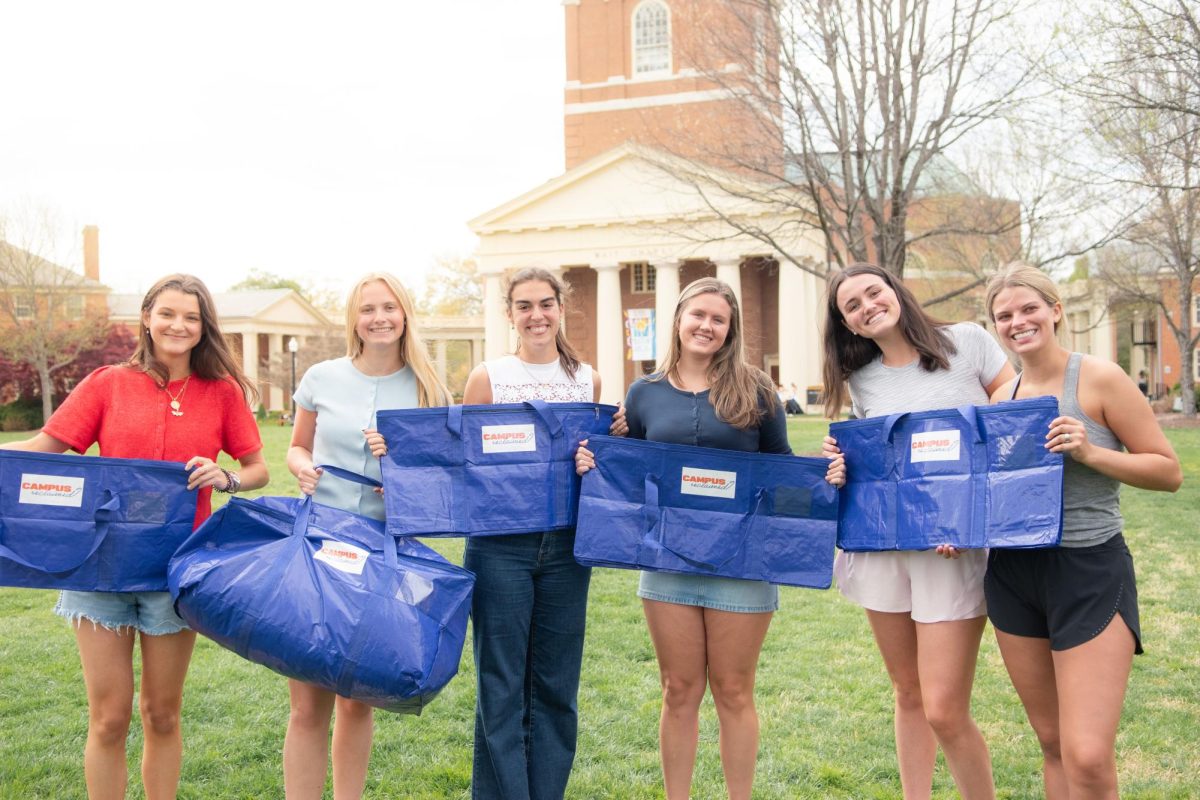
The event featured diverse tabling stations where the Office of Sustainability and campus organizations like dEaCOfriendly led activities, including sustainability trivia and tote-making to help students better understand their environmental impact. Even the ZSR Library joined in, handing out books about nature to passersby.
First-year student Chloe McCaskill described the festival as a “chill way to get outside and meet people.”
“Definitely great with the warm weather,” McCaskill said.
The highlight of the day was a ceremonial tree planting in honor of Arbor Day. Students planted two native Pawpaw trees — unique, banana-like fruit trees that must be planted in pairs — and a Sourwood tree to support native pollinators and provide shade.
These additions bolster a garden that demonstrates innovative techniques like regenerative no-till agriculture, drip irrigation and companion planting, such as pairing basil with tomatoes.
Attendees even got to meet the garden’s feathered staff, including chickens named Gandalf and Nebuchadnezzar who provide eggs for Campus Kitchen. Yes, for those of you wondering, Gandalf is grey.
The festival highlighted the year-round work of the garden’s student leaders.
David Burda, coordinator of the Sustainability Ambassadors program, noted the impressive attendance.
“There is a great turnout, and it’s bringing different clubs across campus together for something that has to do with sustainability, which is awesome,” Burda said.
He shared that the ambassadors are currently hard at work on a new composting initiative and expanding environmental course offerings.
For those who missed the festivities this year, Campus Garden’s Spring Equinox is a must-attend event for next spring as a chance to trade the indoors for fresh air, learn about the environment and connect with the community.