

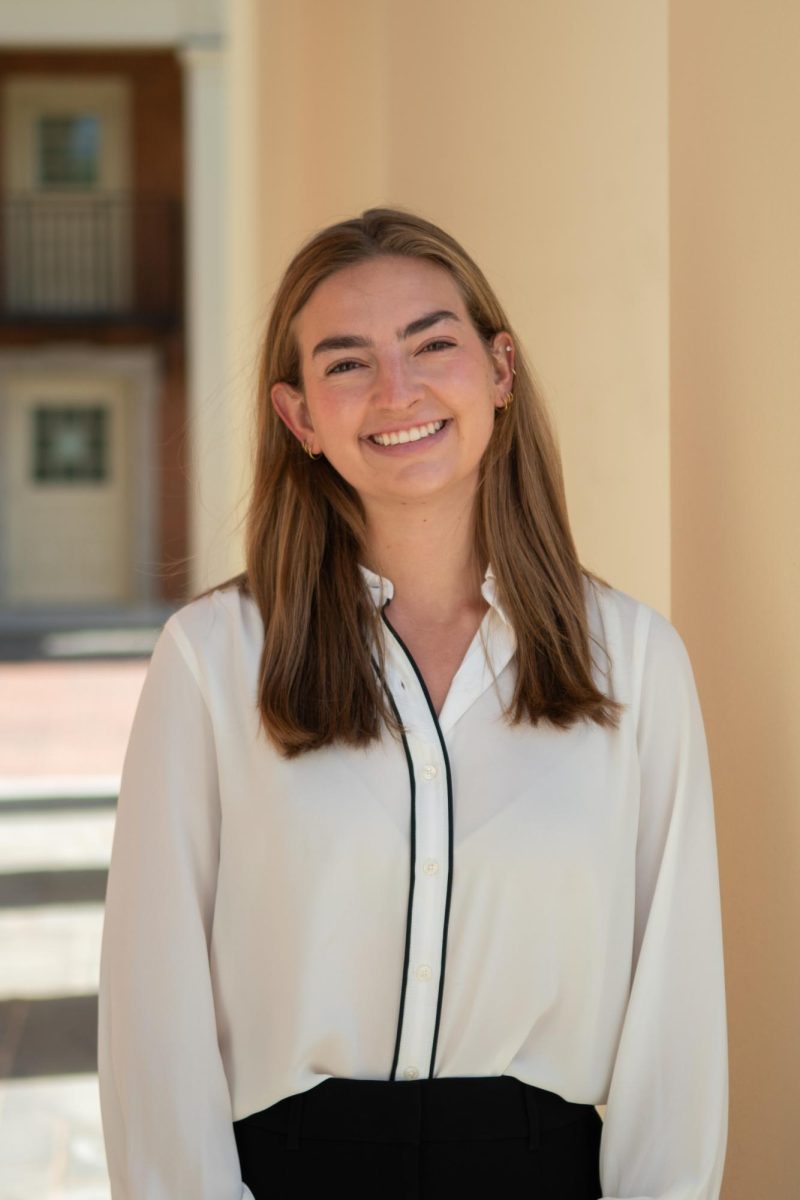
For senior Kate Wanzenberg, psychology has always been about passion. One evening during her childhood, her father, a special education advocate, invited one of his students for dinner. Together, they made a home-cooked meal, sharing food, laughter and lively conversation. Her father prioritized building close, nurturing relationships with his students, and Wanzenberg saw firsthand the difference that made. This experience ultimately shaped her decision to major in psychology.
“It was just so incredible seeing how passionate my dad was about making people feel accepted and supported,” Wanzenberg said. “And I was like, ‘I want to do that.’”
In high school, her interest grew, and she would wake up energized to attend school because of her favorite class: AP Psychology.
“I just loved it,” Wanzenberg said. “It was my first class of the day. And at 7:20 a.m. in my high school, I was like, ‘I really love this class.’ I loved the teacher. It was just so interesting and made so much sense to me.”
At Wake Forest, her passions took further shape, aided by the professors she encountered in the psychology department.
“I’ve honestly really enjoyed all the classes that I’ve taken, but more than that, it’s the professors who have made the department what it is,” she said.
Even in the courses where she felt less confident, like biopsychology, professors like Emily Oor made the material engaging and digestible. Additionally, mentors like her URECA advisor, E.J. Masicampo, and her academic advisor, Shannon Brady, played a pivotal role in her journey, offering feedback and encouragement.
Though Wanzenberg came to Wake Forest confident in her interest in psychology, she also discovered interests in statistics and sociology along the way, eventually declaring minors in both subjects. This combination only deepened her understanding and love for psychology.
“Psychology is like the individual level of why we do what we do,” she said. “Sociology is why we as a group do what we do, and statistics is like how we quantify why we do what we do. They all really inform each other in a very nice way.”
One of the most transformative experiences during Wanzenberg’s time at Wake Forest was her work with URECA, the university’s undergraduate research program. Over 10 weeks, she worked with Wake Forest professor E.J. Masicampo on an intensive research project, an opportunity for which she is forever grateful. Together, they studied perceived moral differences of members of social outgroups, examining how people view the morality of other religious and racial groups. She presented her work at the annual conference for the Southeastern Society of Social Psychology, where it won the Outstanding Undergraduate Post-Bac Research Award.
“I didn’t realize how unique it was until I was at a conference presenting my research,” she said. “It’s so incredible because it’s like one-on-one research mentoring.”
URECA gave her the confidence to pursue graduate school. After graduating from Wake Forest, Wanzenberg plans to study school psychology, a field that combines her interest in psychology with her goal of helping others.
At Wake Forest, Wanzenberg has been able to discover an enthusiasm for psychology, statistics and sociology through experiences from introductory courses to intensive research programs.
“Try everything,” she advised. “Really go out of your way and burden yourself to […] engage with what Wake Forest […] has to offer.”
Wanzenberg has done exactly that, making the most out of her time here at Wake Forest and taking every opportunity to learn more and help others, a trend she intends to continue at graduate school and beyond.
Masicampo echoed this sentiment.
“[Wanzenberg] has been a model student,” he said. “Curious, open, engaged. It has been a joy to watch her grow and flourish as a student and award-winning researcher. She has worked so hard and always with such joy and enthusiasm. She will be missed but I know she will do great things.”


