
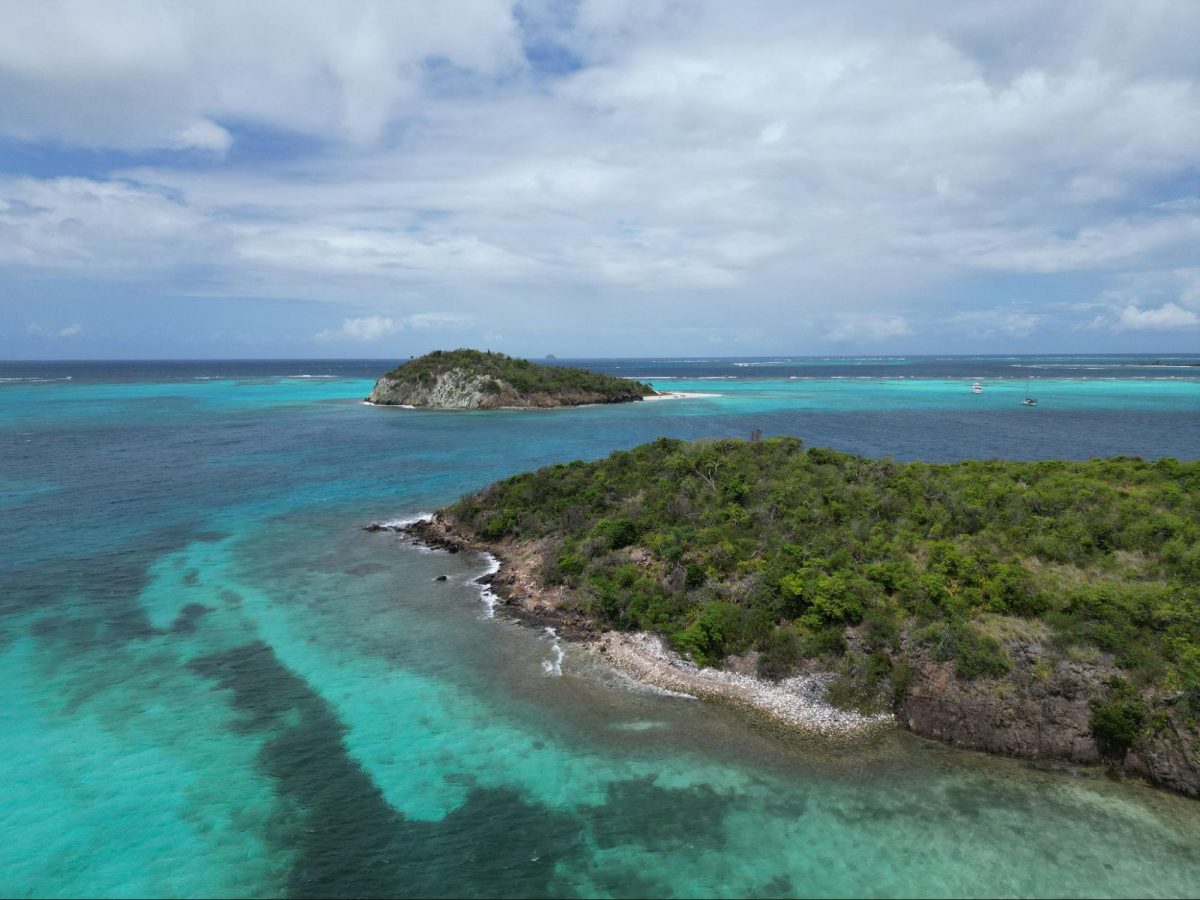
In May, I traveled to Saint Vincent and the Grenadines (SVG) to take an Environmental Communication course through a Wake Forest summer study abroad program. The previous semester, we had researched the Caribbean island country, but my vague vision of the place I was about to encounter could not prepare me for the transformative experience of the next seventeen days. Throughout my time in SVG, I was in awe of nature’s beauty and inspired by the resilient communities that seek to protect the earth and uplift each other.
When I stepped out of the airplane, I was immediately struck by the view. Lush green mountains rose up around the airport, which was painted in cheerful bright colors. Our cohort explored beaches, rainforests and even a volcano, and visited the oldest botanical garden in the Western hemisphere. I saw too many rainbows to count and was dumbstruck by the sheer amount of rain that could fall in ten minutes. It was warm and sunny for the entire trip and there was always time to swim.
After the study abroad program ended, I was fortunate enough to remain in SVG for another week. During this time, one of my favorite memories took place: snorkeling with sea turtles, which humbled and amazed me. While I have always loved sea creatures, it was scary to enter the watery home of puffer fish and stingrays, knowing I had no control over what they might do. As I snorkeled awkwardly with my fins and mouth tube, I learned how little power humans have under the sea. The vibrant waves, turquoise beyond imagination, kept pushing me around as I swam across the reef. One could easily lift me and slam me down into the rocks.
I remember a quote from one of our class speakers, Roseman Adams, a leader in the Union Island Environmental Alliance: “If you push at the sea, sometimes the sea will push back.” In the event of a hurricane, the water could possess enough force to wipe out the most expensive, high-tech boats dotting the coast. Meanwhile, human pollution gives power to the waves as climate change causes more frequent and intense storms. As I swam, nature made me aware of how people are individually so small, and yet our collective actions can be so powerful.
I started to wonder if I would even see a turtle, when suddenly, a green sea turtle (my favorite kind) appeared, gliding slowly over a bed of seagrass. It looked so much like a picture I’d long kept on my laptop wallpaper that I felt a strange sense of déjà vu. I swam to the surface to wipe the fog from my goggles, and by the time I looked back down into the water, the turtle had gone. However, I saw three more turtles that day, all so beautiful and serene that my heart felt swollen with wonder.
Yet the turtles shared the water with something far less dreamlike. Trash peppered the ocean floor, mingling with the reef and the fish. As I later walked along the shore, which was similarly strewn with litter, I started to wonder how I could make a difference. Reducing plastic use, recycling and other common ideas came to mind, but there is so much that we as individuals cannot do on our own. I cannot remove all the trash that is already in the ocean, implement alternatives to single-use plastics, or make executive decisions for the manufacturers and companies that produce the most pollution. I realized how important it is for communities to come together to tackle large issues. Our world is big and complicated, and we all share it; so, too, can we share the responsibility of taking care of it.
I was encouraged to see these kinds of communal commitments lived out in SVG. Another class speaker, Goldman Environmental Prize winner Andrew Simmons, told our class that his basic philosophy was “no one left behind.” From my experience, this summarizes well how the people of SVG care for one another. We once passed through a town where the streets were packed with people dressed in pink for a local woman’s funeral. She had not been a celebrity, yet everyone came together to celebrate her life and wear the color she loved. Another day, we met Patricia Fraser, who works to create sustainability and heritage development programs that empower women and young people. Fraser’s motto is “be positive,” and she pursues her passion for community service with a smile on her face. Even the abundance of small produce stands all over the island, where people can easily buy fresh, nutritious food grown by their neighbors, promotes the connection between economic, physical and social well-being.
The most impactful community stories I learned while abroad related to the devastating impacts of Hurricane Beryl, which hit the islands in the summer of 2024. Hearing about so much death and destruction landed close to home, as it reminded me of the damage Hurricane Helene caused in North Carolina last year. When we visited the National Emergency Management Organization in the capital of Kingstown, they were still preparing massive containers of food to send to Union Island, a particularly affected region of the country, almost a year after the hurricane. Yet the Unionites met their pain with incredible resilience, pride and strength. One Unionite woman I spoke with did not dismiss the terrifying tragedy of Beryl, but had a strikingly grateful attitude when reflecting on her family and community, in whom she found support and encouragement during difficult situations.
When I walked through the study abroad fair last fall, curious but hesitant, I couldn’t predict the wonders that awaited me. Looking back, I am so thankful for my experience in SVG. Not only will I cherish the fun memories of everyday life in the Caribbean, but I remain inspired by the new ways I now think about how to make a difference for the environment and build strong communities. Above all, I have learned how wonderful it is to embrace the unfamiliar and open my mind to adventure.