
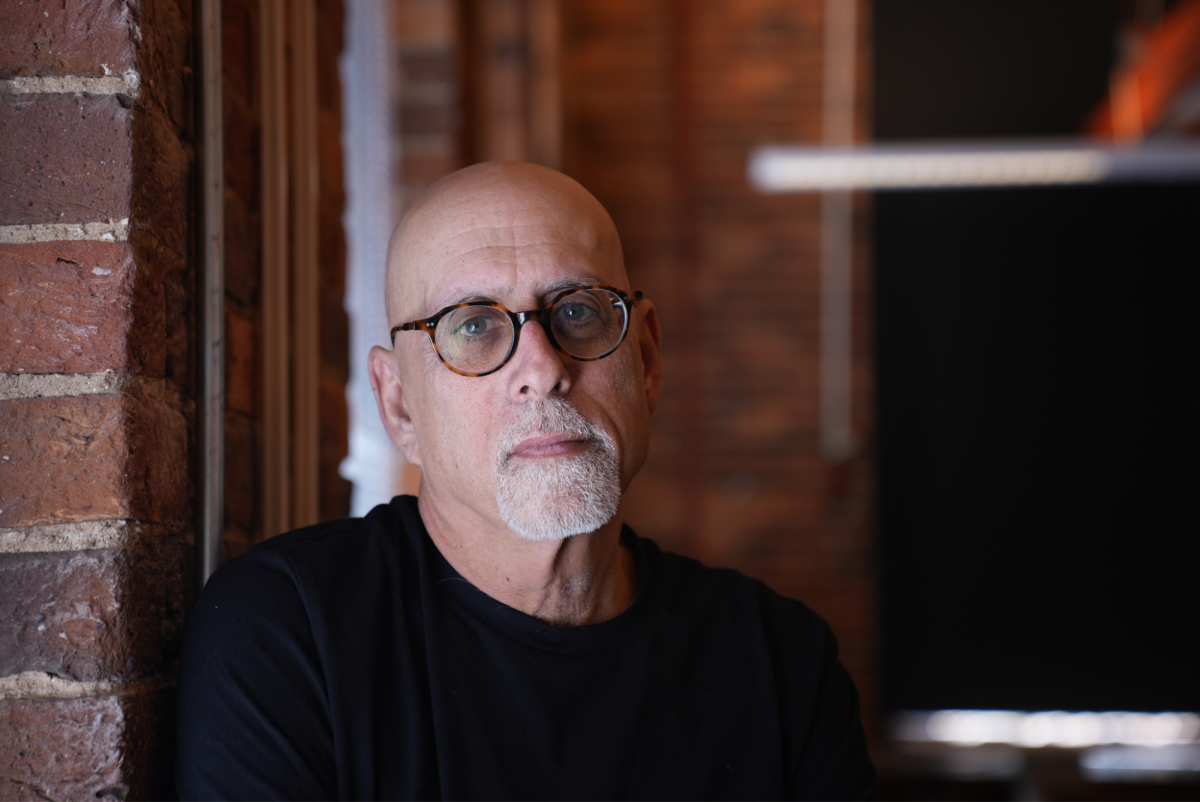
In 1994, Peter Gilbert won the “Best Documentary” award at the prestigious Sundance Film Festival for his documentary “Hoop Dreams.” He was also the cinematographer for Barbara Kopple’s Academy Award-winning documentary “American Dream.” Throughout his career, Gilbert has been short-listed for Oscars and nominated for multiple Emmys. He has filmed presidents for “60 Minutes” and walked the same halls at New York University as movie giants like Martin Scorsese, Jim Jarmusch and Spike Lee.
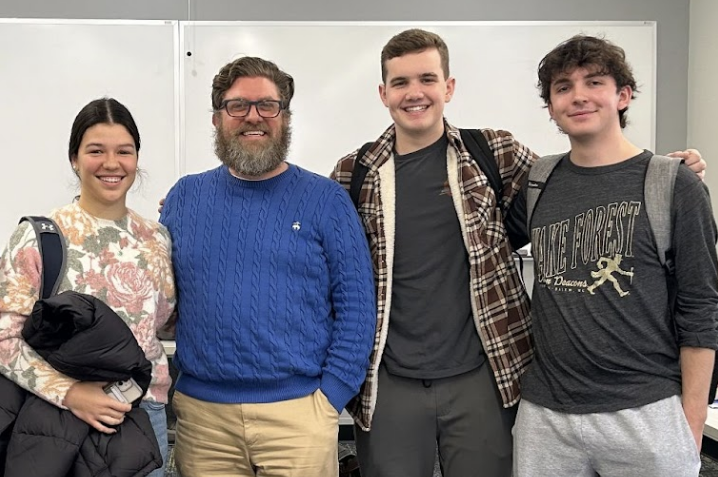
And now, Peter Gilbert teaches here at Wake Forest in the graduate Documentary Film Program.
Hoop Dreams
Gilbert’s “Hoop Dreams” follows two kids from Chicago as they pursue their NBA dreams. But what is so fascinating about the documentary’s five-year journey is witnessing the obstacles that the talented protagonists face in their everyday lives. By the end of the film, the viewer feels as if they were right there with those kids, Arthur Agee and William Gates, for some of the most influential moments in their development. As Gilbert explains, that is the desired effect.
“The kinds of films I make, they are called longitudinal films,” Gilbert said. “If you follow everyday people for a long period of time, you get to see the world through their eyes. Or you see it through how they experience life, but you can never show the whole picture because that’s impossible.”
Following Agee and Gates for pivotal moments in their lives as they navigated family troubles, heartbreak and loss—but also fulfilling accomplishments—Gilbert said it was hard not to get involved both financially and emotionally when things got tough.
Documentary filmmakers generally keep some distance between themselves and their subjects; however, there were a couple of moments when Gilbert and his team decided to break the rules. Gilbert explained that it can be tough to discern when to bend the unwritten laws of documentary filmmaking and when to stick to observing and recording the truth to maintain the integrity of the story. In the end, he goes against the wishes of many of his fellow filmmakers and does a bit of both.
“We finally found Arthur, and we found out that his lights had been turned off,” Gilbert explained. “What we said was that we really want the shot of the lights being out, and Arthur was just pissed at us.”
“Why do you want people to see us looking like this?” Gilbert recalled Agee saying. “Our argument was [that] we just want to take the shot because what people never show is the resilience of people getting over difficult things. But then the thing that documentarians got pissed at us about was later, when the film was done, we then immediately went and turned their lights on.”
By following Agee and Gates’s journeys from high school to college, Gilbert and his crew formed a special relationship with the kids.
“We love them,” Gilbert said of Agee and Gates. “We were very close. We’re still close, we still talk all the time.”
It is easy to tell upon viewing “Hoop Dreams” just how much humanity there is to this half-decade-long journey. The story is uniquely personal with a uniquely human filmmaking touch.
His own graduate school
In order to make a masterpiece like “Hoop Dreams,” Gilbert noted that he didn’t become an award-winning filmmaker by himself. Stumbling into film through a love of photography after being a self-proclaimed “failed music major,” Gilbert met many influential people who helped shape his career.
“I went to a really amazing film school at NYU, so I had people like Jim Jarmusch and Martin Scorsese and all these different folks that were all around the school, as well as Spike Lee and Sam Pollard,” Gilbert said. “A teacher named Haig Manoogian, who ran the film school, was really the guy who sort of told me and helped me find my path.”
After film school, with the help of those before him, Gilbert continued to branch out into the world of film, learning all he could about anything and everything. It was then that he met others in the industry who he said advanced his knowledge and experience in the film trade.
“Barbara Copple won two Academy Awards, one for ‘Harlan County’ and ‘American Dream,’ which is the film that I shot for her,” Gilbert said. “She was, as I always say, my graduate school in documentary.”
Not only did Gilbert view his connections as his own graduate schooling experience, but he also developed very close and lifelong relationships with those he worked with. Gilbert mentioned one influential director who shaped his career while forming a lasting bond.
“In Hollywood, there were more narrative films I worked on and a director I worked with who was really a dear friend named Michael Apted,” Gilbert said. “He was just brilliant and influenced me a lot because he did a lot of music stuff.”
Reflecting on such a long and successful career, Gilbert returns to those who helped him along the way. It is those people to whom he links much of his work. Gilbert said he feels especially grateful for those who supported and taught him as he entered the filmmaking world.
“I was very lucky to have these people,” he said.
Sharing it with the new generation
Now, Gilbert teaches in hopes of influencing aspiring new filmmakers. Like those who once helped him, he wants to help the new generation learn how to tell powerful stories. According to him, you just need a desire to share with the world to apply for the Documentary Film Program.
“You don’t have to be a brilliant cameraman or an editor or anything,” Gilbert said. “The whole point of it is to learn how to tell the stories of documentary films, which are the stories of real people.”
Along with learning how to tell these stories, Gilbert mentions how this program lets students experience the world in a totally new way. Instead of passively experiencing the world, they can dive right in and connect with their surroundings on a deeper level through filmmaking, all the while working in some pretty cool places.
“It’s the greatest way in the world to experience the world,” Gilbert said. “Rather than being a tourist in it, you get to experience it by actually meeting people, seeing the world through everyday folks’ eyes…then on top of that, we have students who work for HBO, ‘60 Minutes,’ and ESPN.”
If you’re interested in seeing more of the world through a filmmaking lens, the Documentary Film Program could be the program for you. Gilbert added that if you are a creative mind and love composing stories, you will thrive from the very start in this program.
“That’s what we teach, we’re more about ethics, storytelling and making things,” he said. “So when you get here from day one until you leave, you’re making stuff.”
Gilbert emphasizes the importance of documentary filmmaking. It is not just an academic pursuit or a potential career path.
“To me, it’s really a great way to go through life,” he said.
So, film lovers, music lovers, people lovers and world lovers, there is a program for you. And, it is led by Peter Gilbert, an award-winning filmmaker with endless advice and stories to tell.