
Ben Spencer spent over 30 years in a maximum-security prison for a crime he didn’t commit. After the Dallas, Texas native’s arrest in 1987 following the murder of white businessman Jeffrey Young, Spencer, then a 22-year-old newlywed and expectant father, watched his life dissolve from behind bars.
“I’m thinking that I’m going to be released, because they’ll realize I’m telling the truth,” Spencer said. “I always assumed that the judicial system worked.”
But it didn’t. Again and again, the state of Texas shot down Spencer’s appeals. Facing a life sentence, he prayed daily for his neighbors whose false accusations led to his wrongful conviction, then prayed for his own strength. Hope seemed lost.
Then journalist Barbara Bradley Hagerty stumbled across Spencer’s story. Convinced of Spencer’s innocence, Hagerty spent years reporting tirelessly for NPR and the Atlantic on the injustice of his incarceration.
“If a judge says that you’re innocent, and you can’t get out of prison, what’s the point?” Hagerty asked, referring to a Texas judge’s ignored 2008 recommendation that Spencer be retried.
Her work led to Spencer’s release from prison in 2021 and his exoneration in 2024. Also in 2024, Hagerty published a book chronicling her efforts, titled “Bringing Ben Home.”
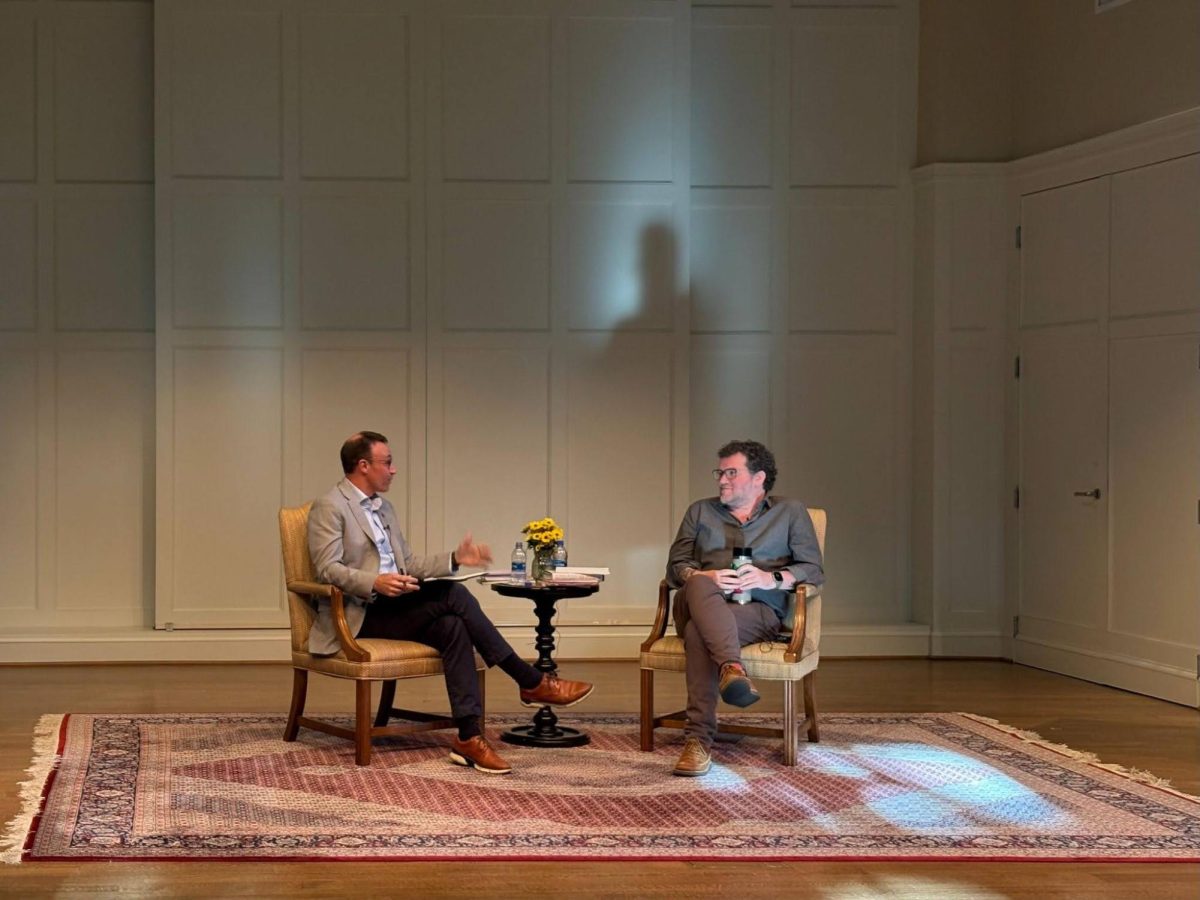
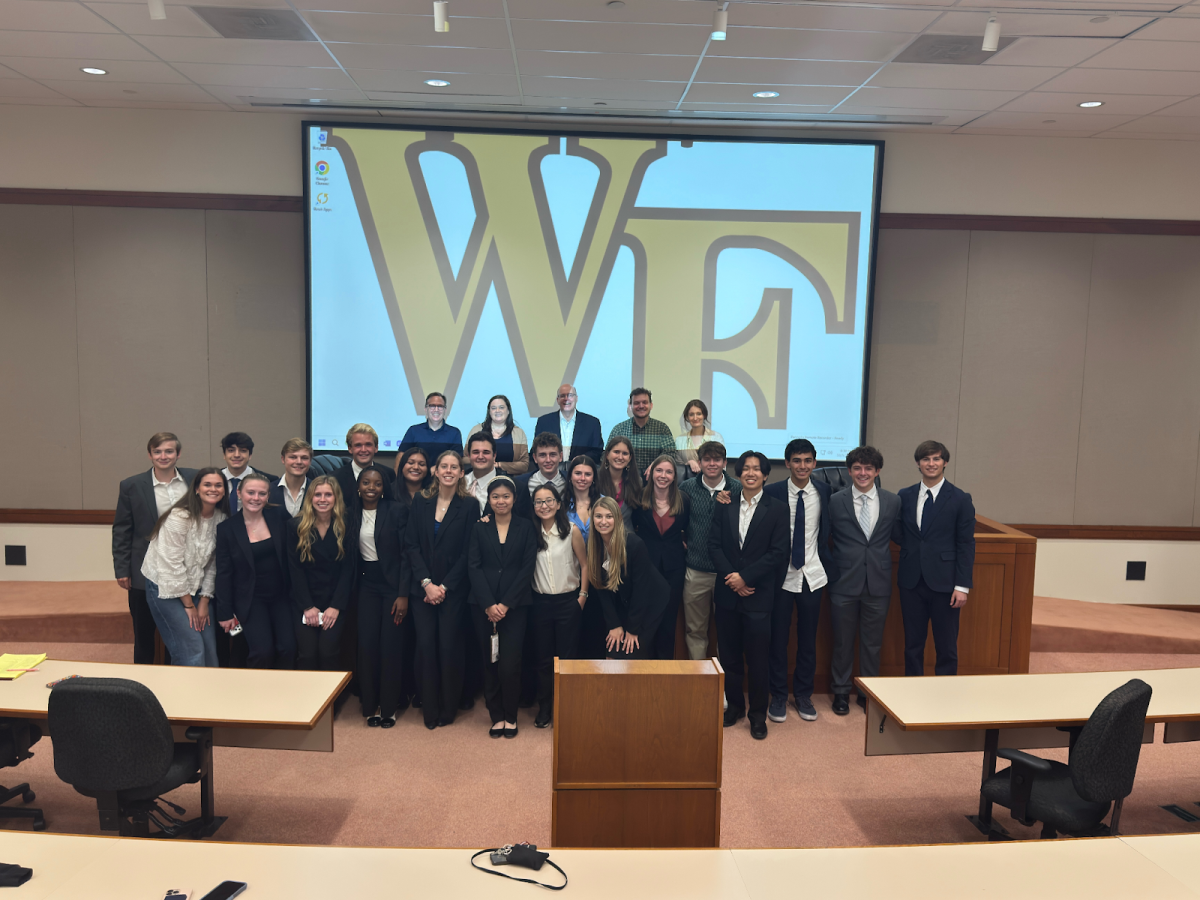
At an April 2 event in the Worrell Professional Center, Spencer and Hagerty discussed “Bringing Ben Home” with Wake Forest professors Mark Rabil, director of the Innocence and Justice Clinic, and Bryan Ellrod, director of pre-law programming. The Office of the Dean of the College, the Program for Leadership and Character, the Department of Interdisciplinary Humanities and individual donors Roy Henwood and Nancy Kuhn sponsored the event.
Journalist and former prisoner tell of injustice
Spencer and Hagerty spent the majority of their talk discussing the details of Spencer’s case as well as Hagerty’s reporting process.
Hagerty said she first learned of Spencer’s situation when speaking with Jim McCloskey, founder of the innocence clinic Centurion Ministries.
“I called up Jim, and I said, Jim, what’s the case that haunts you?” Hagerty said. “What’s the case that keeps you up at night?”
The case McCloskey had in mind was horrific, and not only because it locked away the innocent Spencer. The victim, Young, was attacked and robbed while exiting his office. The assailant hit him over the head, cracking Young’s skull in five places, and put him in the trunk of his own car. Young likely managed to hoist himself from the trunk, but ultimately died in Spencer’s neighborhood.
Spencer had an alibi, and no security camera footage or physical evidence like DNA indicated he could be guilty. But three of his neighbors lied in court, incentivized by a $25,000 reward.
“People will say I’m being gracious or whatnot,” Spencer said. “But in my heart of hearts, I do not believe that my neighbors set out to get me convicted when they made these accusations.”
After Hagerty learned of Spencer’s ordeal, she immediately knew she wanted to help him. Furthermore, she realized his experience illustrated a broader crisis in the legal system’s unjust treatment of Black men.
“3,800 people have been wrongly convicted since 1979,” Hagerty said. “I had to show that this was not a one-off. This happens all the time.”
At times, the truth wasn’t easy to find. Hagerty recounted going door-to-door in West Dallas with an armed private investigator named Daryl Parker to track down people with information about the 30-year-old case.
“It’s pouring rain… and as [Parker] is about to knock, he looks over at me, and he sees that I’m standing right in front of the door,” Hagerty said. “And he moves me over like this, and he goes… ‘sometimes they shoot through the door.’”
“I’m a Washington reporter,” Hagerty exclaimed to gasps and laughter from the audience. “No one has ever tried to shoot at me through the door—at least not members of Congress, at that point.”
Formed by faith and relationships
Though Texas formally exonerated Spencer of his prior convictions, there are some injustices that they could not remediate. He will never get back the time he could have spent with his family during the prime of his life.
Spencer remembered begging his wife, Debra, to divorce him after the courts rejected his first appeal around five years into his sentence.
“My hope for her was that she would find happiness and be okay in life, and her and my son would be alright, and I would try to do what I could to try to help myself while I was in prison,” Spencer said.
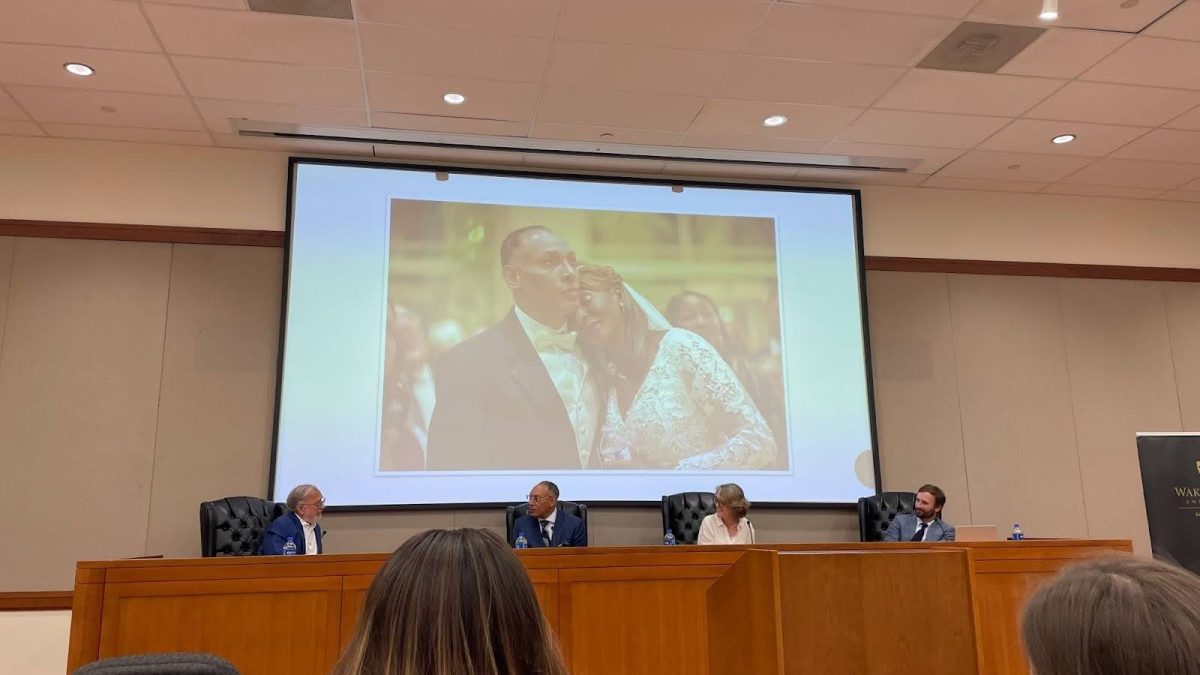
Though Debra did divorce Ben, the two stayed in touch and reconnected after his release. They remarried on Jan. 10, 2022, exactly 35 years after their first wedding.
Spencer credited his survival in the most wretched of circumstances to his faith.
“I would just say it’s God,” Spencer said. “I continued to hope and pray that one day the truth would prevail, and it was a long time coming, but it eventually did.”
Hagerty is also a devout Christian. She said her faith motivated her quest to bring justice to Spencer.
“Clothe the naked, feed the hungry and visit the prisoner,” Hagerty explained, referring to Jesus’s lessons to his followers in Matthew 25. “It’s pretty basic stuff.”
Reflections on release
“If you want to feel like a morally deficient person, all you have to do is spend time with Ben Spencer,” Hagerty quipped. “I asked you what you wanted now that you were out… and I thought you were gonna say ‘I want a really great car,’ or ‘I want a different type of job.’ But what you said is… ‘what I want is for the Young family to believe that I’m innocent.’”
She played a video of Spencer speaking at his exoneration in August 2024. Unbeknownst to Spencer, the murder victim’s son, Jay Young, was present in the courtroom that day. Spencer spent his first minutes of freedom remembering Jay’s father and the rest of the Young family.
“I’d ask that we don’t forget that myself and my family were not the only victims in this, but the Young family were victims as well, because they lost their loved one, and the person who was actually responsible for what happened to Jeffrey Young was not brought to justice,” Spencer said that day. “So I’d ask that you pray for the Young family and be mindful of them.”
Spencer has worked to build a relationship with Jay Young since.
Student reactions
Students in attendance said they found Hagerty and Spencer’s remarks shocking and inspiring.
Sophomore Julia Hammerman heard about Hagerty and Spencer’s campus visit through the student organization Advocating Reform for Correctional Clients.
“I’ve always been interested in wrongful convictions,” Hammerman said.
Sophomore Peter Raymond is a pre-law student and learned of the event through posters on campus as well as conversations with Pre-Law Program Director Ellrod.
“I was very interested to see an individual who wasn’t treated properly by the law [and] still chooses to pursue justice,” Raymond said.