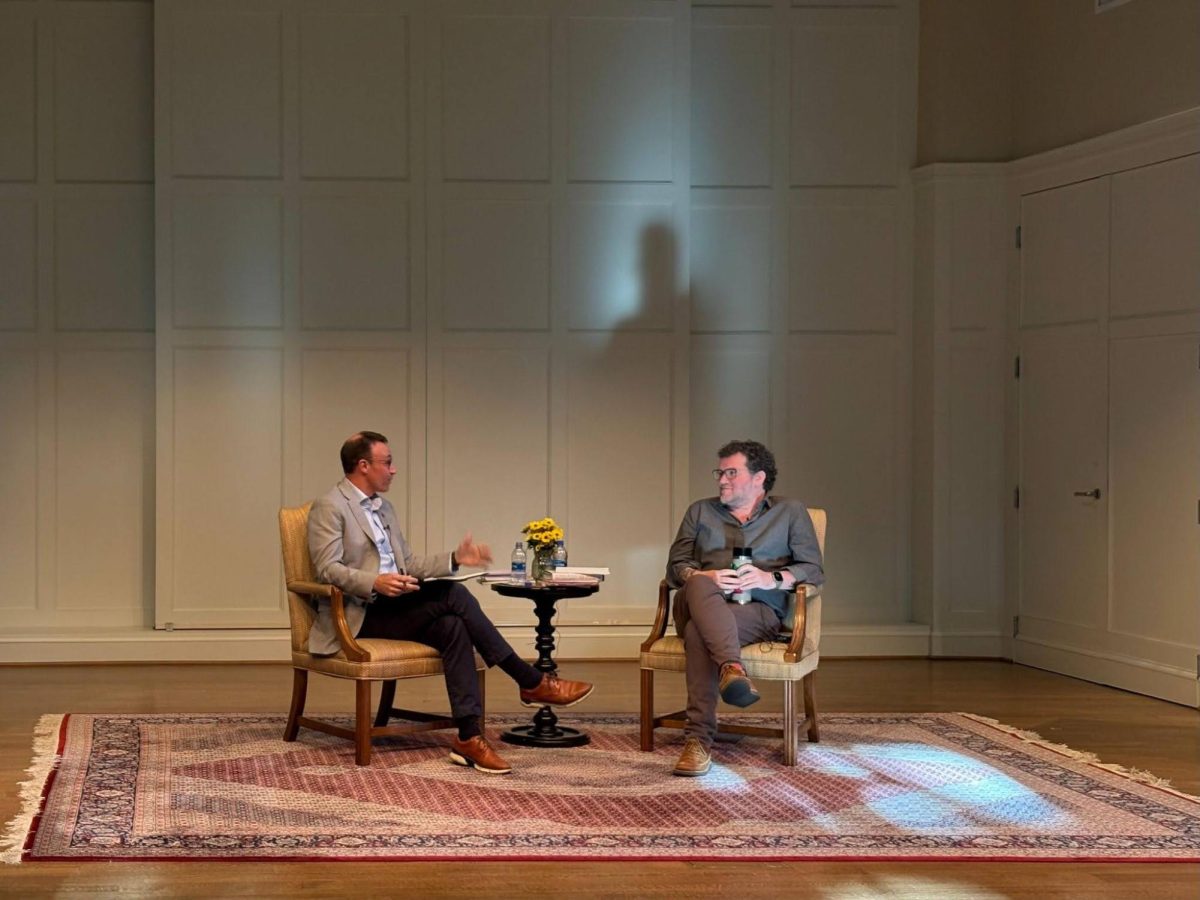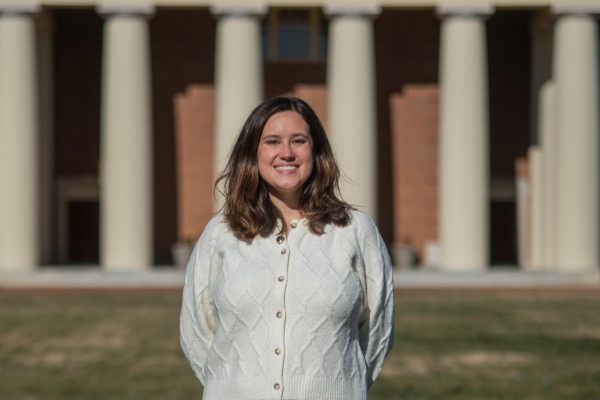

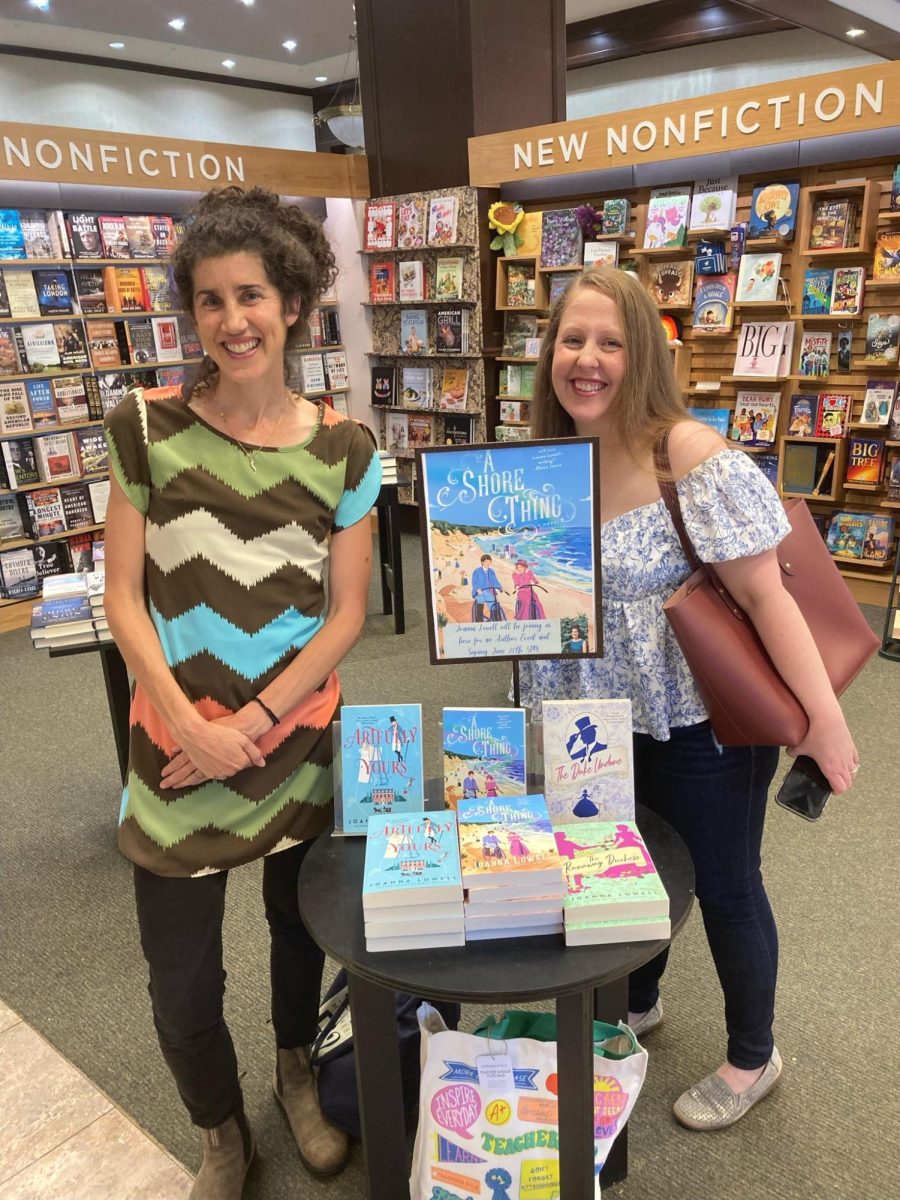
Dr. Joanna Ruocco is a Creative Writing and English professor at Wake Forest. She is Chair of the Board of Directors for Fiction Collective Two and an experimental publisher who has published several notable works of experimental fiction. She has also published six historical romance novels under the pseudonym Joanna Lowell. Her 2024 novel, “A Shore Thing,” which featured a queer and transgender romance, was named a“Best Romance of the Year” by The New York Times and Parade. She joined Features Editor Taylor Riley for a Zoom call to discuss her work as a genre author, her research process, and why she believes queer narratives must be told. This interview has been edited for clarity and brevity.
Taylor Riley: When did you first realize you wanted to be a writer?
Joanna Ruocco: I’m one of those people that wanted to be a writer since they were a kid. I would write in notebooks my epic, unfinished novel of twin mice, Cheesy Wheat One and Cheesy Wheat Two. I wrote it for years, and I would just write synonyms. My descriptions were like, “And a crow flew from the tree. It’s opalescent, pearlescent, iridescent, shining.” I was trying to fit in every word.
Riley: Did you also read a lot of books as a kid?
Ruocco: I read romance and genre fiction as a young person. But then, like many of us who are bookish and good at school, I was taught that there are books you read if you’re erudite and sophisticated. I felt like I needed to read Samuel Beckett and Virginia Woolf, because that’s what you read if you’re a serious person. When I was doing my PhD and feeling like I wanted to read something fun, I decided I was going to start writing a romance novel to let off steam.
Riley: Does interacting with students as a Creative Writing professor inform or impact how you work as an author?
Ruocco: Yes, absolutely. It feels like a really collaborative and exciting mode for me to continually be in the classroom with young people and hearing what they think. Seeing that students read popular books, and feeling like there is no place for that at school, you’re missing out on having students be excited about reading.
Riley: You’ve written six historical fiction novels as Joanna Lowell. What draws you to that genre?
Ruocco: Historical [fiction] is what I read when I was a kid, what I found for five cents at the library bargain bin. I really like the escapism. These settings are fantastical, and you get to be somewhere that you can never travel to. I also feel that historical books hold up a mirror to the present in really interesting ways. There’s a little more freedom to take on really important issues.
Riley: What does your research process look like for preparing to write in another time period?
Ruocco: I read some novels to get a feel for the period, but I also read a lot of secondary sources. I often spend six hours researching something just for a throwaway detail, like the pilchards fishing industry. I just want readers to have the feel of the time.
Riley: Book bans have been sweeping the nation for the past few years, specifically targeting books by and about people of color and queer people. What do you think about these book bans and their implications for our intellectual freedom?
Ruocco: Book bans are really, really dangerous. They’re targeting young people, limiting the kinds of stories that kids have access to and reinforcing the isolation and the siloing that you feel as a kid in a red state where your library and your school no longer have books that show queer people living happy lives or tell stories of BIPOC people in history. It diminishes the ability for people who don’t share that identity to imagine and empathize. It’s a really frightening thing, and it’s the kind of thing that you do see in totalitarian states. I was told that I shouldn’t really expect many translation rights for “A Shore Thing” or “A Rare Find,” because there are countries where they don’t sell queer books. As a rejoinder to people that believe the only things that are selling now are queer books, my queer titles don’t sell as well as my straight titles.
Riley: What motivates you to center LGBTQ+ themes in historical fiction, especially if it’s not as financially successful?
Ruocco: It’s harder to find queer historical narratives, and that was really important to me to represent. For “A Shore Thing” and “A Rare Find,” the types of relationships in those books are much more like the types of relationships that I have lived. My partner is a trans man. In this current culture war, people are saying falsely that trans people are a threat, like it’s something that’s been promoted in the past few years on the internet. But people living outside the gender binary have always existed. Giving queer and trans people their own narratives was something that I really wanted to do, both because I want to see more of it in the world and also because it was a chance to tell a story that was more like my own story.
Riley: Why is it so important to be publishing LGBTQ+ narratives now, when queer and trans people are being attacked by the media and legislation?
Ruocco: One of the really brutal myths of people who are spewing anti-trans rhetoric is that trans people aren’t real. That’s what’s behind this narrative of “men in the women’s bathroom.” What they’re really saying is that a trans woman is not a trans woman, that transness doesn’t exist. Fiction does not replace activism. It needs to go hand in hand with policy changes, but it’s part of what people have to fight back. People telling their stories, and trans and queer people feeling affirmed and like they are not alone.