

On Sept. 27, 2024, Hurricane Helene decimated the Florida Big Bend Region, Tampa Bay and Fort Myers-Naples, as well as parts of the southeastern United States and southern Appalachian region. More than 250 lives were lost and countless lives were affected.
Hurricane Helene, a category 4 hurricane, brought inland flooding, intense storms, dangerous winds and offshoot tornadoes which destroyed homes and businesses across the country. It was “the deadliest hurricane in the contiguous U.S.” since Hurricane Katrina in 2005, and the nation paused to remember the lives that were lost.
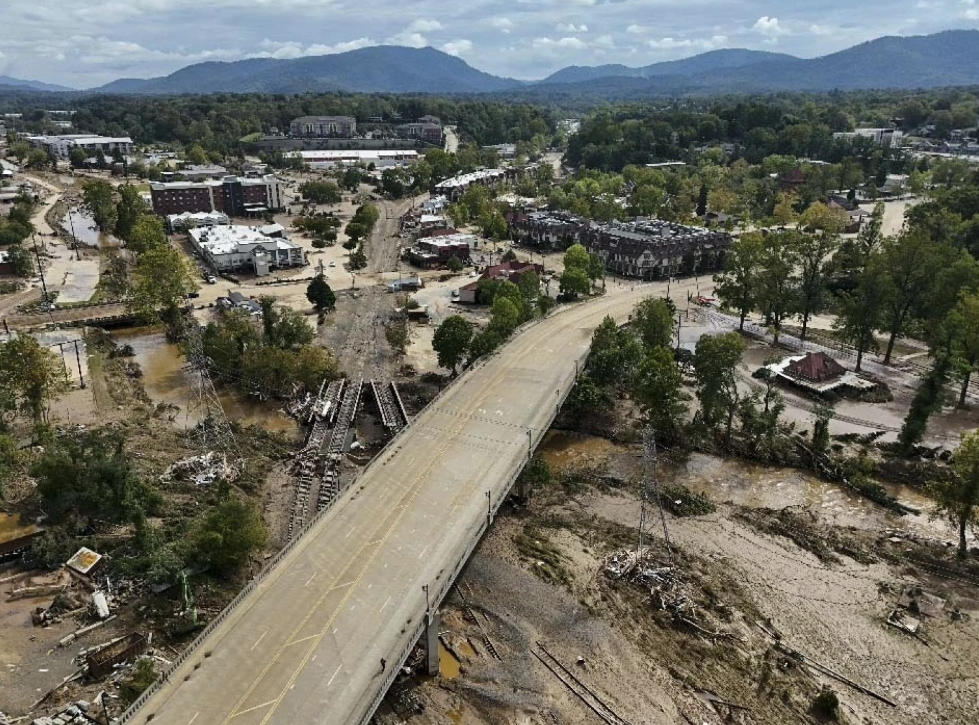
The damage was particularly catastrophic in North Carolina, where flooding caused more than 100 deaths. Rainfall from inclement weather softened much of the soil around the state, leading to several landslides—one of the most severe in a community called Craigtown in Fairview, where many smaller landslides converged into a single channel that destroyed homes and killed 13 people.
A recent article from WRAL in Raleigh recounted the impacts of the hurricane, one year ago today.
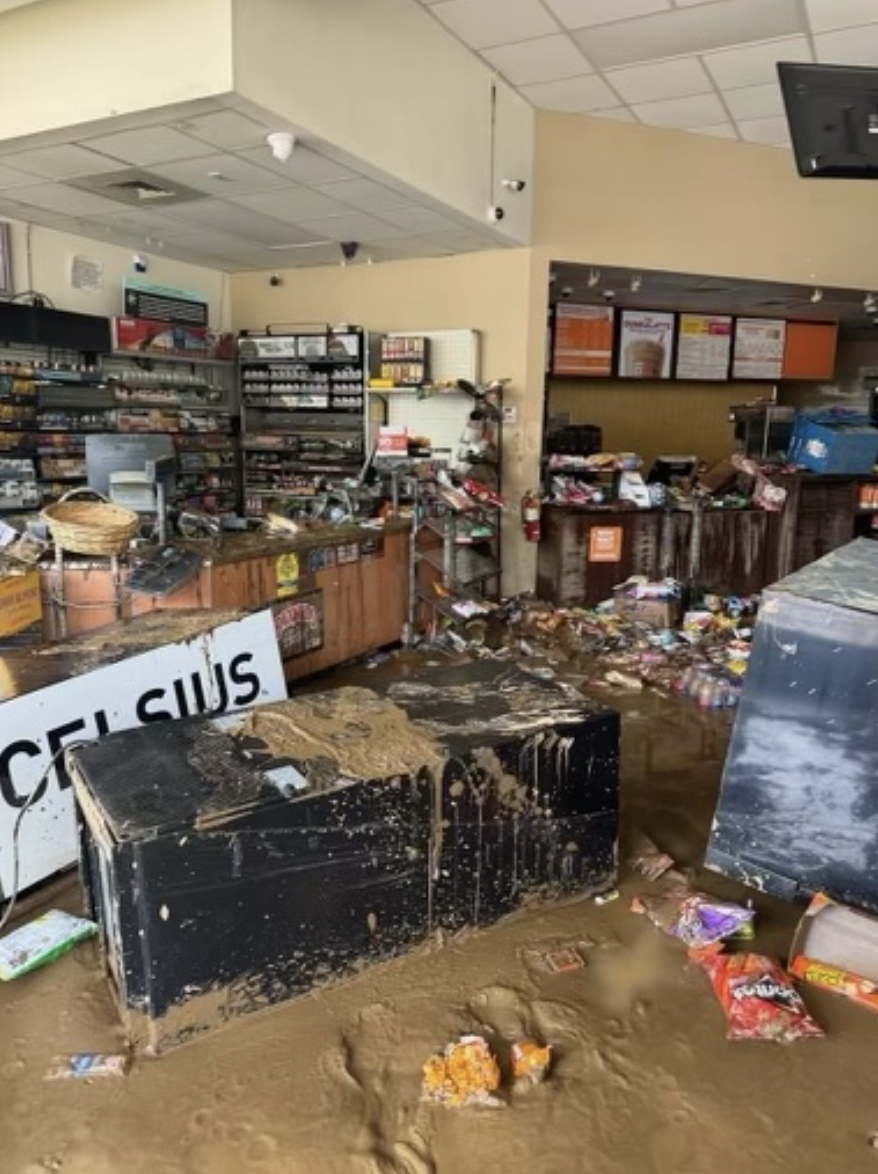
“Damage came in many forms,” said Mark Bergin, senior multiplatform producer for WRAL. Landslides, debris flows and historic levels of flooding inundated and destroyed homes, businesses, parks, hospitals, the electrical, cellular and water infrastructure, and damaged thousands of roads, highways and bridges.”
Helene also devastated communication and travel networks, including much of Interstate 40 and Blue Ridge Parkway, where ongoing construction is still working to repair the damage.
Many lives have been touched by this tragedy. Many people went days or weeks without communication with their families, friends and loved ones.
Dr. Matthew Greene, who specializes in infectious disease at Mission Health in Asheville, recounted his experience with the hurricane. He and his family had seen news regarding the hurricane down south and potential storms, but they never imagined that it would be anything like this. He says he drove to work that morning, and by the time he went home, entire neighborhoods and businesses were wiped out.
From his experience at work, he recounted how the hospital was badly impacted and patients’ lives were put at risk.
“So from a hospital standpoint, that eliminated anybody being able to be on dialysis or have surgery,” Greene said. And, you know, that was just catastrophic. So for 48 hours, work was just total pandemonium.”
Greene also recalled the reliance on the radio that ensued, as phone lines went dead and the internet connection was severed due to the storms. He also remembered bright moments of community that shone through the chaos of the hurricane.
“There was a guy in the neighborhood who had Starlink on his camper. So sometime within the first, probably week, he would let people come to his backyard to just text family members to give updates because he had the internet,” Greene said. “That, I think, is the only upside of any of this, and I would argue there is probably not any real [substance] upside, is how it was a moment where the community came together, and that was inspiring.”
Despite the bright moments, the Hurricane hit many communities extremely hard—in ways that are still felt today.
“We didn’t have any access to texting anybody at all for probably four to five days, and the rumor mill was spreading so fast about how bad other towns had it. So the horrors of Helene that we’re all still talking about makes me a little queasy. There are little towns around Asheville that were totally ruined and remain deeply scarred still.”
Greene is not alone. Helene and the destruction it caused touched many lives.
It is important to acknowledge the immense impact that Hurricane Helene has had on families, communities and the country as a whole.