

Eli Leadham had no idea what to expect when he received an invitation to join an unsuspecting Zoom call with Sociology professor Hana Brown. He simply assumed they would review more details about the recent application he had submitted, talking and reconnecting as they had for the past few months.
When he logged onto the call, Wake Forest President Susan R. Wente’s face appeared.
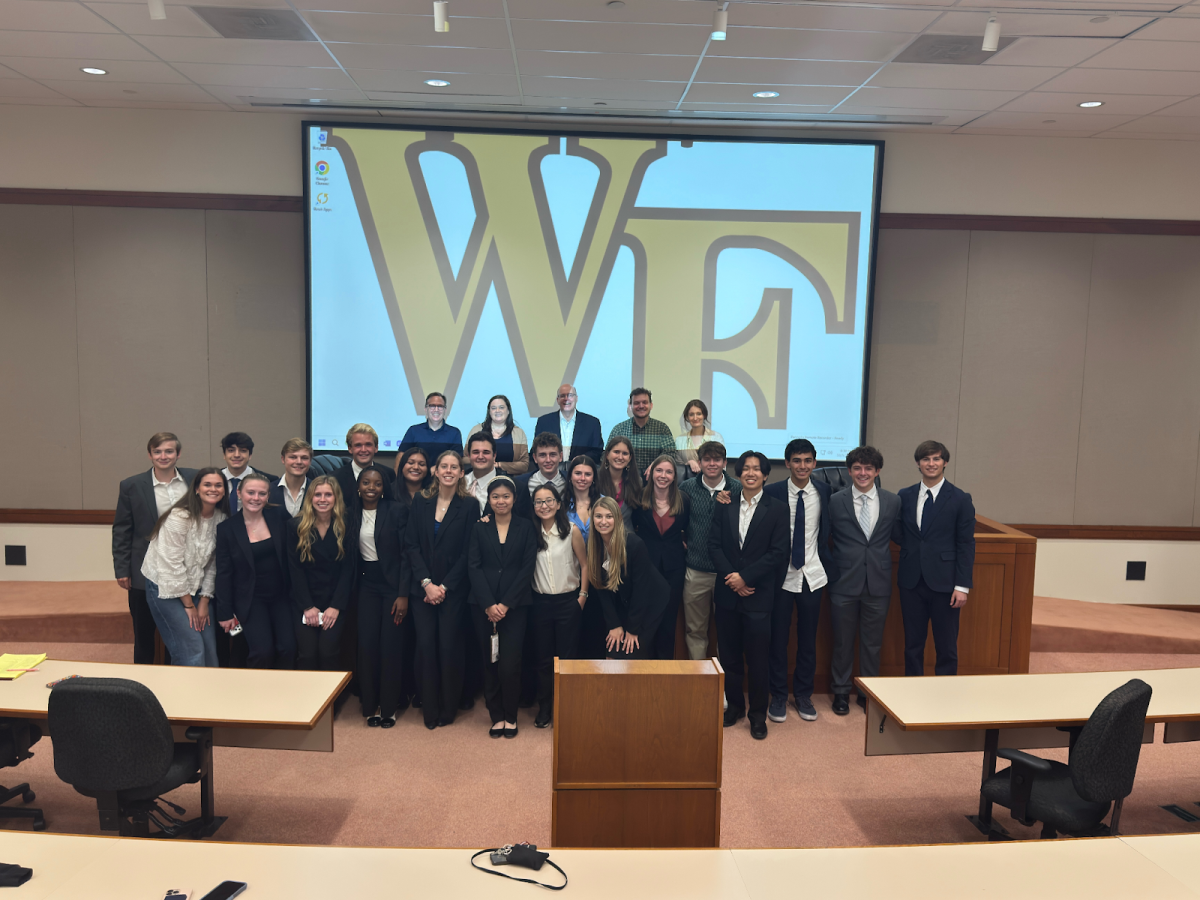
She informed him that the Truman Foundation added his name to the list of 18 Wake Forest students to be named a Harry S. Truman Scholar, the most prestigious graduate fellowship for juniors committed to careers in public service.
Aiming to test aspiring leaders at a crucial point in their development, the scholarship recognizes dedication, leadership and academic excellence. Apart from the alumni network and esteemed reputation, the award also supports a $30,000 scholarship for graduate school.
“Public service has different definitions for everyone,” Leadham said. “The Truman Scholarship really is an affirmation that public service, in some way, shape or form, is the right path for me. It will be an investment in my future financially and through being connected to the Truman family, which includes groundbreaking scholars.”
Since arriving at Wake Forest as a presidential scholar in debate, Eli Leadham has been a zealous advocate for criminal justice reform and sexual assault prevention. Starting in high school, Leadham has dedicated much of his time to debate a safer community, stemming from the personal experience of being sexually assaulted at a high school tournament.
“Debate was a really cool way to see perspectives from the other side,” Leadham said. “You’re defending a resolution, but then you also have to negate it. I think this opens up your perspective, and so that’s why you kind of inherently have to care about others.”
Leadham’s interests in public service lie in ending mass incarceration and addressing discrimination in the criminal and legal systems. A big advocate for sexual and domestic assault prevention, Leadham has dedicated his time to multiple organizations, both within Wake Forest and outside of the community.

The senior has used his personal experience as a survivor to advocate for sexual assault prevention at the U.S. Attorney’s Office of Sexual Offense and Domestic Violence. On campus, he is the Interpersonal Violence Prevention Student Assistant in the Office of Wellbeing and a member of Advocacy Leaders in Interpersonal Violence Education (ALIVE).
“I am excited to think further about the prison re-entry process and use restorative justice practices when exploring communal reintegration,” Leadham said.
Leadham is also actively involved in abolitionist organizations like the Triad Abolition Project, a Winston-Salem organization committed to advocating for survivors of sexual violence and reducing the over-reliance on prisons. He has been involved in the Forsyth County Bail Fund, facilitated know-your-rights workshops, offered consultations for clemency petitioners and documented legal proceedings as a court watcher.
“Right now, our criminal justice system is failing those it is built to protect, survivors, and I see it as my future to advocate for those most vulnerable,” Leadham said.
Leadham describes the process of applying for the Truman Scholarship as time-consuming, challenging and most importantly, meticulously deliberate.
“The application process requires you to jump with both feet in because the competition is so steep,” Leadham said. “It was a marathon instead of a sprint and it took a whole village of friends, professors and debate coaches to review countless drafts to receive an institutional nomination.”
This process was all the more difficult due to Leadham being abroad for the entirety of his junior year. As a Richter Scholarship recipient, Leadham traveled to Japan, attending Kansai Gaidai University to study and research the historical legacy of the atomic bombings of Hiroshima and Nagasaki.
It was not a typical application. Apart from specific character count requirements for public service questions, it also included a policy proposal, a hypothetical statement asking to detail a policy and creating an entire legislation the recipient would implement at the national or statewide level.
Thankfully, he had a myriad of support and resources. Brown, who is both a Truman Scholar herself and Wake Forest’s Truman Advisor, introduced Leadham to the award and offered instrumental support in his application process.
As he became a finalist, Leadham’s debate history came to his aid. The interviewers asked adversarial and aggressive questions, attempting to rattle the recipient. Leadham acknowledges that his extensive background in debate was a good skill to have.
“I really had to stand my ground,” Leadham said. “I was stubborn and dug my heels into it.”
Leadham highlights the Wake Forest Faculty, their support and mentorship, not only for the help on his application but for everything they have done throughout all his years on campus, which ultimately made the process nearly seamless.
Looking ahead to the future, Leadham has several different ideas for his next adventure; getting experience in fellowships, a master’s degree and a paralegal job are all options. His eventual goal is to become a practicing attorney, exploring international human rights.
While Leadham acknowledges the scholarship will help him in his journey, he has put in the work throughout his entire academic life to reach the prestigious and respectable reputation that he now holds so early in his career.
“I learned to put all my eggs in one basket,” Leadham said. “And, when it comes down to it, hard work beats talent when talent doesn’t work hard.”
Correction 10/20: A previous version of this article online contained a spelling error. The Old Gold and Black has since updated the article to reflect the accurate spelling.