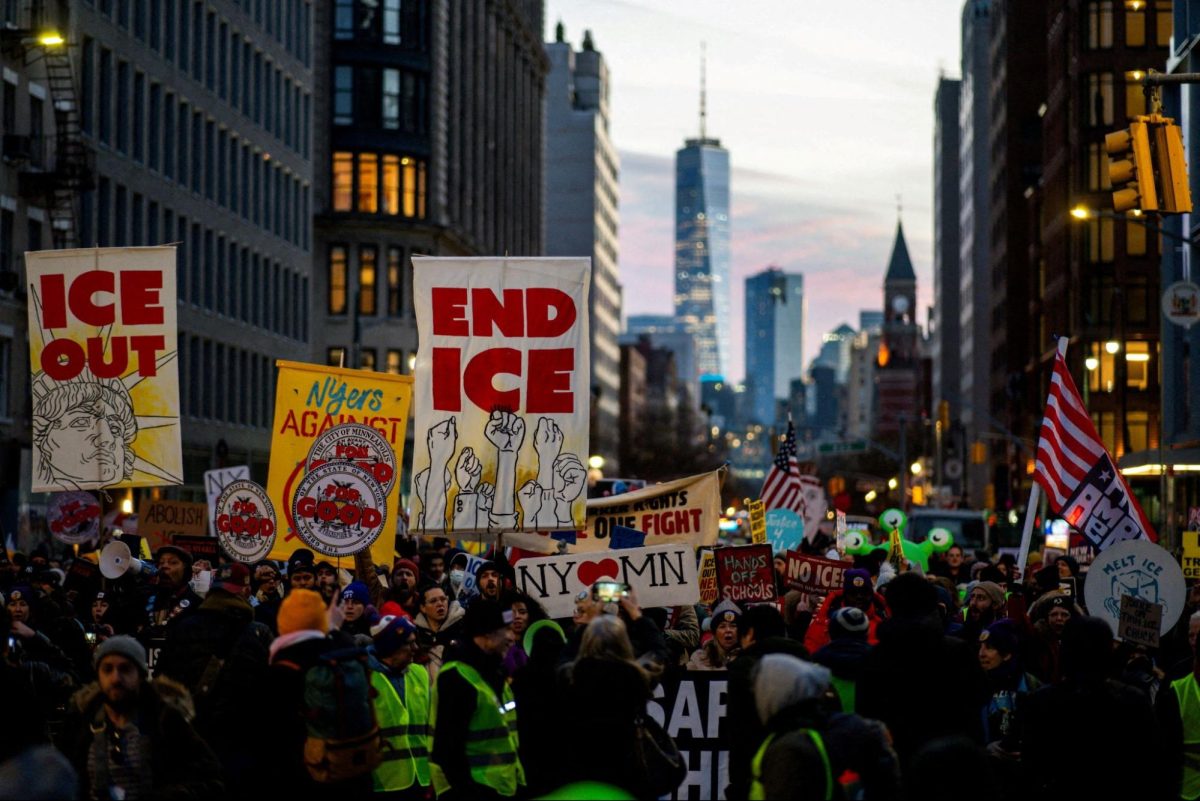


In the darkness of the night on Oct. 4, 101 members of the California National Guard entered Oregon on a plane, authorized to pass over state lines by President Donald J. Trump.
His rationale: Portland, Oregon is a “war-ravaged city” with protestors threatening ICE facilities. His justification: Title 10 authority, a loose, exploitative ability to deploy the National Guard to “execute the law.”
These actions come amidst several other planned deployments by Trump in largely Democrat-run cities, including Washington D.C, Memphis, Los Angeles, New York and most recently, Chicago.
Fortunately, both federal statutes and the Constitution deem these actions largely illegal and unconstitutional. Unfortunately, it doesn’t seem like this administration has read either.
“There is no insurrection in Portland. No threat to national security. No fires, no bombs and no fatalities due to civil unrest,” U.S District Judge Karin J. Immergut has noted. Immergut, a Trump-appointed judge, issued a block on the president’s deployment only to be ignored by the administration.
Immergut refers to the troubling notion that the President has absolute discretion in classifying what an emergency is, a perception supported by Supreme Court precedent in Luther v. Borden which designated emergency classification a “political question”.
However, these early cases aren’t entirely indicative of the current legal perspective. In 1952, President Truman was famously barred from seizing and operating steel mills across the country during the Korean War in the decisive case, Youngstown Sheet & Tube Co. v. Sawyer, which concluded that the president acts as a legislator in unilaterally seizing assets for an emergency.
Although that emergency was explicit, the 1972 “Keith Case” is especially prevalent in deciphering whether emergencies are politically motivated. The court ruled that the government required a judicial warrant before undergoing domestic surveillance, worrying that “domestic security” intrusions can easily be politically motivated, violating the Fourth Amendment.
Statutory evidence also combats Trump’s reckless deployments. Most importantly, but also most perilously, lies the Posse Comitatus Act of 1878, which prohibited the military from taking an active role in civil law enforcement over fears of militant overbearance.
The act contains two discreet loopholes, one concerning the DC national guard, and the other instituting “Title 32 status”, a position where guard members receive federal funds to act under presidential orders while still under state control. Historically, mutual aid agreements, based on Public Law 104-321, are the only cases such interstate deployment at the request of governors is applicable, most often used for natural disasters like during Hurricane Katrina. Trump’s administration has forgone these conventional routes and coerced state governors to quell fabricated dangers.
If we take away every law and ruling, the practical questions of democracy remain. If Title 10 Authority allows the president to compel National Guard members to act under federal authority on the dangerously general premise of enforcing the law, who’s to say the executive can’t warp law towards political ambitions? We cannot be afraid to question the motives of our leaders, nor succumb to the fear induced by their political machines. A bipartisan reiteration of individual liberty is needed to correct these abuses of power.
California Gov. Gavin Newsom has joined Oregon in a suit against the president attempting to block California’s National Guard from Portland while peaceful protestors continue to come face-to-face with militarized officers on the streets of American cities.
Newsom calls it as it is: “A breathtaking abuse of law and power.”