
Senior Anthony Jimenez always knew he wanted to stay close to home for college.
A Walkertown High School graduate born and raised in Winston-Salem, Jimenez has fond childhood memories of visiting Wake Forest when his older brother was a student. He remembers the construction of Magnolia and Dogwood Residence Halls, the annual return of autumnal foliage and the pleasant campus ambience.
However, Jimenez was most excited to attend Wake Forest because of its convenient location.
“If not Wake Forest, I was going to choose another school here in North Carolina,” Jimenez said. “My main goal was staying near my family [because] that’s a key part of my identity and culture.”
With his home neighborhood just a short drive away, Jimenez could maintain his deep roots in the local Mexican community and prioritize spending time with his parents, three brothers and infant niece.
“We were able to see [my brother] every weekend, and that’s what I wanted to do with my family… be able to be present for those events, birthdays [and] holidays,” Jimenez said.
As a nationally-ranked private university, Wake Forest draws its student body from all 50 states and almost 40 countries. Yet Wake Forest can seem wholly disconnected from its immediate surroundings, with students regularly describing campus as a “bubble.”
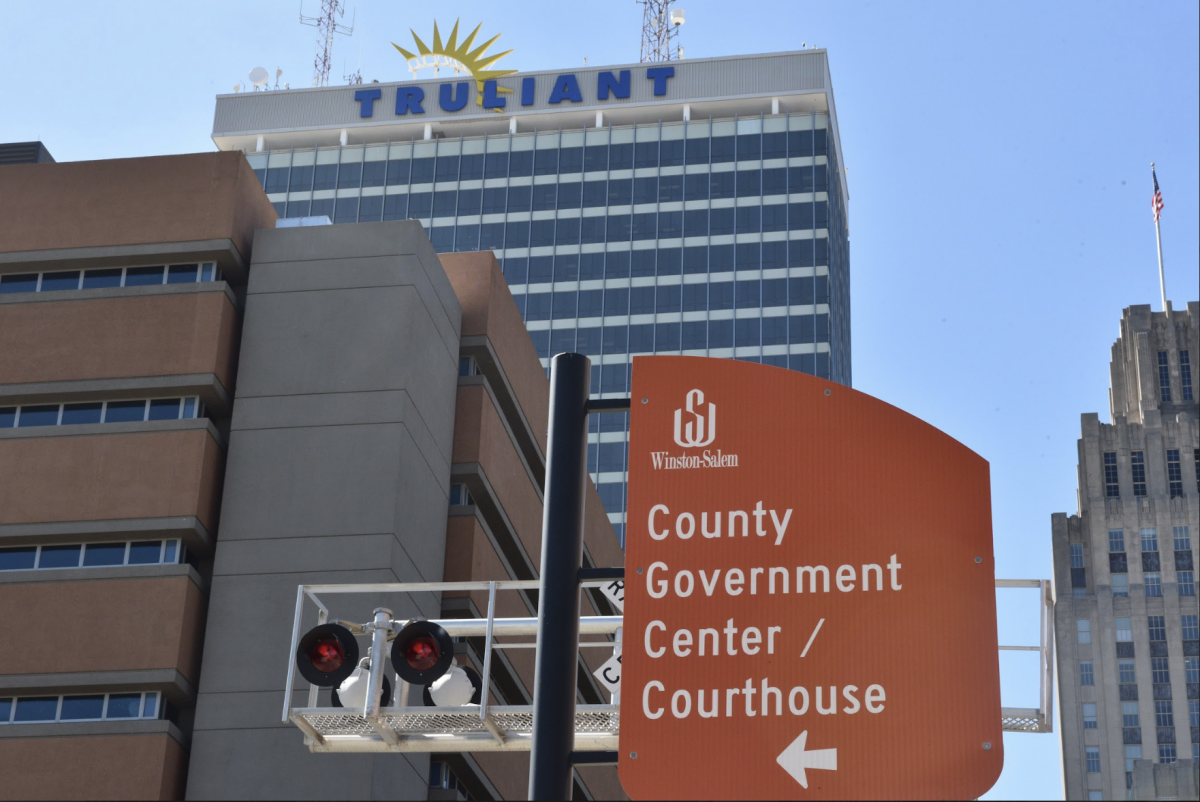
However, a plurality of students – 860 in Fall 2024, or almost 16% of the total undergraduate population – hail from North Carolina. They include many from Winston-Salem, the fourth-largest city in the state and the Reynolda campus’ home of 69 years. Having lived and worked on both sides of the campus gates, local students hold a unique perspective on the university and its relationship to the city.
Senior Lenore Williams graduated from Parkland High School and lives with her parents around fifteen minutes away from campus near Hanes Mall. As a rare commuter student on a highly residential campus, Williams said she has had to “do more work” to build relationships at college than her peers. However, she said spending time off-campus with out-of-town friends has only increased her appreciation of her hometown.
“I’ve spoken to a lot of people who come from very small towns… and they’re like, wow, [Winston-Salem] is great,” Williams laughed. “I’ve taken a lot of that for granted because I never would have considered Winston-Salem to be a big, exciting city at all. It’s been great to see it from other people’s perspectives.”
Sophomore Effie Glazekos Sabean has heard the exact opposite from many of her classmates.
“I’ve heard a lot of people say that Winston-Salem is a cute college town and I just never thought of it as that,” Glazekos Sabean said. “Wake Forest was just part of Winston-Salem, not the opposite. Now, when I go downtown or to other parts of Winston-Salem, I’m noticing the Demon Deacon stuff, and it definitely seems a lot more interconnected than I thought.”
Glazekos Sabean has lived in the West End and Ardmore neighborhoods of Winston-Salem and graduated from R. J. Reynolds High School. She held a favorable view of Wake Forest growing up, especially because her mother is a philosophy professor at the school, but said students at her high school felt “pretty divided” about the university.
“The people that are more middle- to upper-class, I would say, had a positive impression,” Glazekos Sabean said. “I think a lot of people do think it’s like the ‘rich kid’ school, so there’s a little bit of a negative connotation with it.”
Sophomore Hannah Laxton, who grew up about 20 minutes from campus on a soybean and corn farm in Yadkinville, N.C., agreed that many local residents have a “bad taste” of the university as a “snobby, rich kid school.”
“I think it’s really tough for people to choose Wake Forest, being from North Carolina,” Laxton said, adding that many of her classmates at the private Calvary Day School were turned off by Wake Forest’s high cost of attendance. “Obviously, middle-class [and] upper-class people were at my school, but they couldn’t even afford to come here.”
Laxton was cautiously optimistic when she heard Wake Forest’s recent announcement of its “Gateway to Wake Forest” program, which promises free tuition for admitted North Carolinians whose families make under $200,000 a year.
“I feel like a lot more people will really consider coming to Wake Forest,” Laxton said. “But [some] people I’ve heard are a little skeptical… is it now going to be harder for those [students] to get in?”
Laxton also referenced “the Grounds” construction project as another initiative with potential to either improve or deteriorate the university’s relationship with the city. The 100-acre mixed-use development near the football stadium is partially funded with a $35 million grant from North Carolina and Winston-Salem.
“People don’t like to support [the university] because Wake Forest has never really made an effort with the community,” Laxton said. “I feel like the Grounds is a good step to make that effort.”
Sophomore Jack Sweeney, a graduate of Reagan High School who grew up 10 minutes from campus, also said he approves of the university’s investments in the city.
“I think that Wake Forest really appeals to young people to try to get them to start their lives in Winston-Salem,” Sweeney said, specifically naming the Innovation Quarter surrounding the School of Medicine downtown. “Wake Forest does a lot for the community in terms of employment opportunities. There’s obviously a lot of pros and cons to [revitalization] but it was certainly a big change that Wake Forest brought to the area during my childhood and teenage years.”
Sweeney said he originally wanted to move away for college, but is glad to attend an institution he heard so much about as a child.
“It’s like… putting a face with a name,” Sweeney said. “I’m not sure I had a very accurate view of what life was like at Wake Forest, even as a Winston-Salem resident.”
A Presidential Scholar in Music, Sweeney is also grateful for the opportunity to stay involved with local ensembles and musical events and said he wished that more students took advantage of off-campus activities.
“I would definitely encourage students that aren’t from Winston-Salem to get out in the city more,” Sweeney said. “It’s a really wonderful place, and it’s a really wonderful place to have a life, have a family. Definitely make the most of your time here.”
Despite initial worries that she wouldn’t “fit in,” sophomore Effie Glazekos Sabean said she’s enjoying her time at Wake Forest and doesn’t regret staying in her hometown.
“For anybody who is from Winston-Salem and is nervous about going to Wake Forest…because they think it’s too close to home or like they won’t have a real college experience, I would just say that’s not true,” Glazekos Sabean said. “You can make it what you want.”