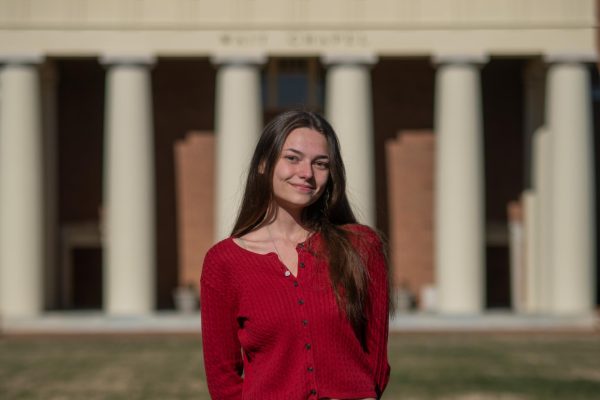

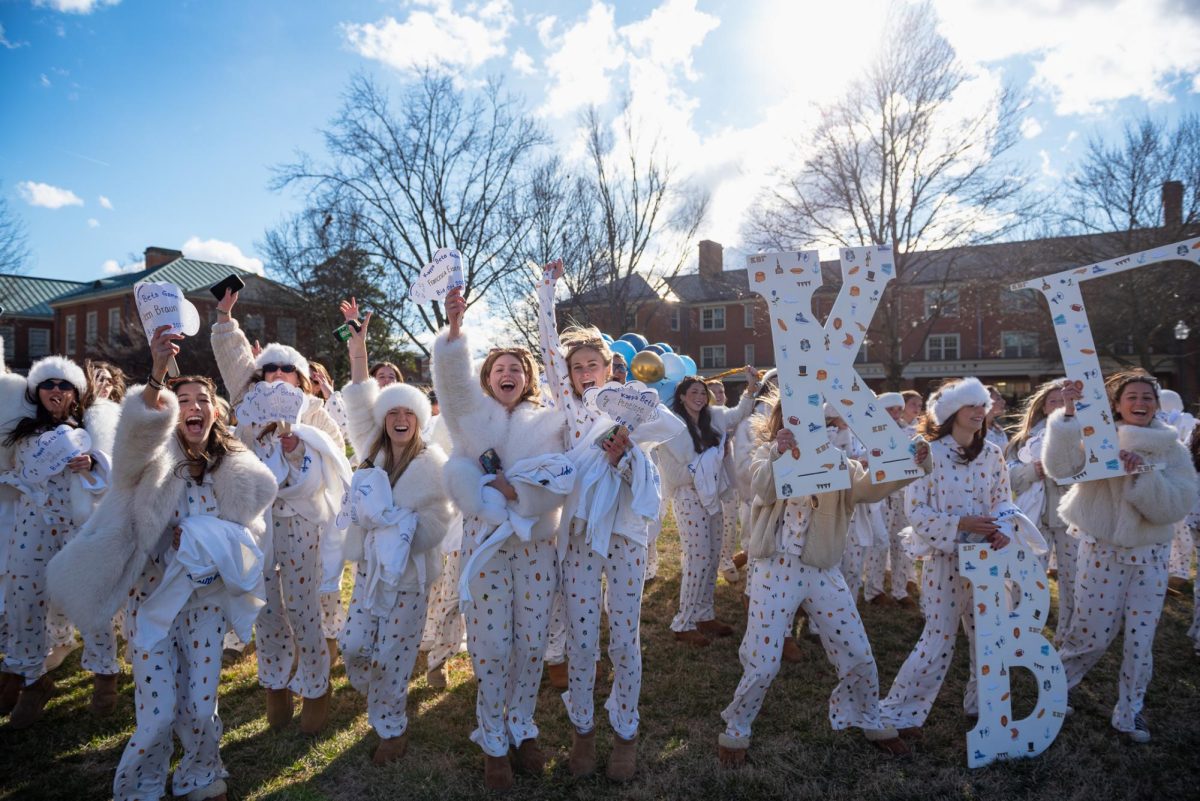
More than 700 female students returned early to campus to participate in formal Panhellenic recruitment this January – the largest number in Wake Forest history. With sorority pledge classes approaching 100 members and recruitment stretching to compensate, rush has become a logistical challenge for both organizers and potential new members (PNMs). Beyond the matching dresses, curated conversations and emotional bid day celebrations lies a process that is carefully orchestrated to suit the evolving needs of the Panhellenic Council.
Ava Balsinger, Kappa Delta’s Vice President of Recruitment and Marketing, said the most significant difference to this year’s rush was increased participation.
“With more people, it definitely creates a lot more logistical issues,” Balsinger said. “With more people, you can’t [recruit] at certain spaces on campus.”
Traditional recruitment locations like Pugh Auditorium and Carswell Hall were unavailable this year due to occupancy limits, requiring organizers to secure more chairs and coordinate alternative facilities and schedules. The increased scale of formal recruitment also raised expenses both for chapters and participating students.
“[Last year, PNMs] would have only had to pay around $50 to rush,” Balsinger said. “This year they had to pay almost $150 to come back to campus.”
Balsinger noted that these costs can create barriers for students who may already feel unsure about participating.
“I think it definitely… can separate some people that don’t have the financial availability,” Balsinger said.
2026 was also only the second year of recruitment to be conducted fully in-person since the pandemic, adding another layer of organizational complexity. Balsinger rushed during a hybrid year, when early rounds were conducted over Zoom. The digital method, she admits, was less authentic but logistically easier.
“I personally loved how when you go back in-person, you can feel the energy of the room,” Balsinger said. “It gives more of a straightforward expectation of what a chapter looks like instead of having eight more orchestrated [Zoom calls]. It feels a little bit more fake online.”
Each day of recruitment looks different and comes with its own challenges. Sophomore Aanya Shah, a member of Kappa Delta, said her rush experience felt overwhelming.
“The first few days were definitely the most stressful and chaotic,” Shah said. “Because you’re just getting a grasp of everything and you’re trying to put on the best version of yourself at all times.”
As the week progresses, the conversations deepen. Philanthropy rounds focus on service, sisterhood rounds emphasize personal connection and preference night introduces ritual and tradition. Shah said that the emotional weight of rush builds alongside the intimacy.
“By preference, I would say that it was more exciting than it was stressful. Obviously, there were still nerves and stress about what was going to happen, but I feel like my excitement kind of took over after the first couple of days,” Shah said.
Shah said watching a “Sisterhood” video significantly influenced her decision to join Kappa Delta.
“I could just tell that the energy in the room was just so genuine,” Shah said. “I was watching the video, and I felt like I could see so many of those people being my friends.”
Shah also noted her own qualms with some aspects of the rush process, including the public release of each day’s schedules. Women often learn if they have been dropped from a sorority when looking at these schedules, meaning they may have to process disappointment in front of an audience.
“It was just so emotional for everyone and you saw so many different sides of people,” Shah said. “There were girls crying, there were girls laughing and excited and happy and it felt like … you still had to keep up your persona because you didn’t want people to get any insight into how you felt about how things were going.”
Both Shah and Balsinger emphasized that decisions are not made lightly, and campus chapter leaders often lack much control.
“[The number of women sororities accept] is set by national chapters,” Shah said. “No one at Wake Forest, not even our president, has control over that.”
For freshman Sophie Petronzio, recruitment was exhausting and emotional, but ultimately rewarding. Petronzio, a new member of Chi Omega, described each day of rush as offering a different window into sorority life.
“Preference…[is] really a beautiful way for you to feel like you’re already part of the sisterhood,” she said.
With sorority membership widespread at Wake Forest – in 2024, 65 percent of female students participated in Greek life, according to the University Factbook – and growing visibility of sorority culture online, some students feel social pressure to rush. Shah observed that these dynamics may affect students’ decisions to participate in recruitment.
“I think it’s mostly fear of being left out of things,” Shah said. “A lot of girls are convinced that if they don’t rush, they’re going to lose their current friend group.”
While Petronzio said she didn’t feel pressured to rush, she acknowledged that Greek life plays a large role in Wake Forest’s social culture.
“There is a large percentage of girls who participate in Greek life and a lot of social activities revolve around that, so a lot of girls decided to rush,” she said.
Freshman Katie Pike-Werle echoed that sentiment.
“The worst part was probably the mornings because waiting for rejection you know is coming is not fun,” Pike-Werle said.
What made recruitment worthwhile, she said, was building connections both within her chapter and across recruitment groups and other sororities.
“I went in with an open mind about everyone, and I think that was my best asset in the long run,” Pike-Werle said. “Even if I knew I was probably not going to be a part of one group, I was able to find girls in almost every sorority who I am still in touch with. I am also still very close to the girls in my rush group since it was those girls who would comfort you and have your back when you got your answers in the mornings. It is just an all-around great way to meet people and make good friends.”
Both freshmen emphasized the importance of entering recruitment with an open mind. The upperclassmen offered similar advice.
“I think it’s important to stay true to yourself and stick to how you feel in every situation,” Shah said. “Everyone’s experience is different. [The] good thing about rush is that it’s so rewarding in the way that everyone finds their place at the end of the day.”
Despite potential pressure, disappointment and exhaustion, many students agree on one thing: rush often leads women to meaningful community.
“It’s stressful for everyone,” Balsinger said. “But it’s also an opportunity to meet people you might never have talked to otherwise.”
“Wherever you end up is where you should be,” Petronzio said.