
We live for Thursdays and we weep when Saturday comes to an end.
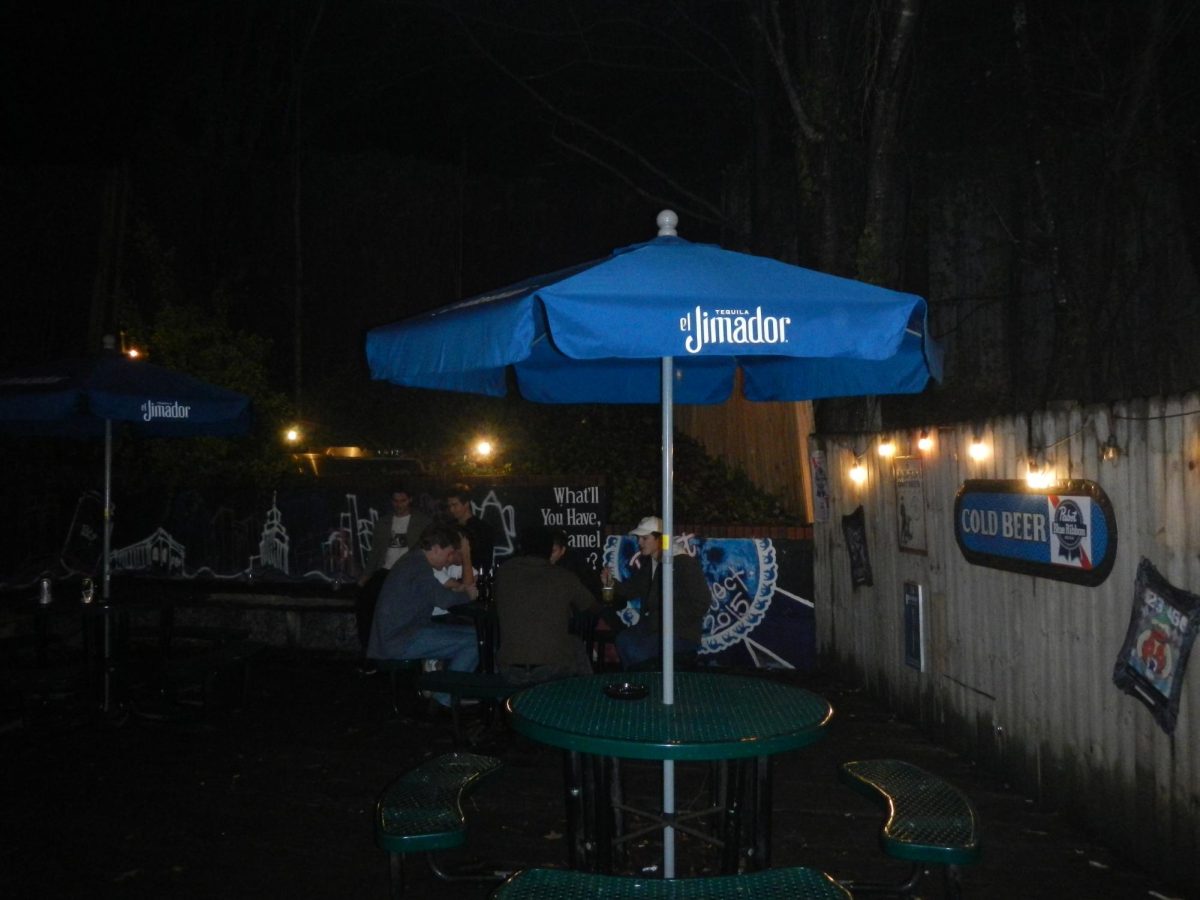
At Wake Forest, we joke about the predictability of our weekends: bars on Thursdays, fraternities on Fridays, “narties” (night parties) on Saturdays. Bamboo, Miller’s, Joyner’s, Sofa, Dive, Burke, Gatsby’s. The same faces, the same conversations, just rearranged. The joke lands because it’s true. The repetition of our weekends mirrors the repetition of our overall social lives.
We go to one of these bars or fraternities and sit around, chat with the same faces and meet very few new ones. Often, people just hang around with the groups of people that they go out with, and don’t venture far beyond those groups. We fear approaching the unfamiliar.
We have a tendency to frame this pattern as resulting from the physical spaces we occupy, be it the right bar or the right fraternity house. But the enduring social architecture of Wake Forest isn’t about buildings. It’s about who’s in them.
College is destabilizing – there’s no doubt about that. Of course, students turn to people who feel like home. It’s human instinct. But familiarity comforts us because it rarely demands cognitive risk. When we limit ourselves to the narrow circles in which we feel most at ease, we aren’t challenged to give thoughtful consideration to the ways in which we socialize.
This leads us to unconsciously reconstruct the same mental structures from which we came. Our “new” friends understand our family dynamics, our childhood memories and even our social rhetoric. Conversations and connections come easily because they run along preexisting grooves.
It’s apparent in the ways we organize ourselves on campus that Wake Forest students are fond of this social stratification. We do not merely gather, but sort ourselves, gravitating toward those that confirm our preexisting molds. This is most apparent in student organizations and Greek Life, where fluency is mistaken for depth.
One of my friends travelled to Philadelphia this weekend and met a woman whose daughter is a freshman at Wake Forest. This woman asked my friend what sorority she belonged to. Then, with an air of superiority, she lauded her daughter’s supposedly “better” sorority.
Before college begins, we inherit a set of cognitive templates that determine what counts as “interesting,” “cool,” and even “normal.” When we arrive here at Wake Forest, swimming among those ruptures in identity, we don’t discard those templates. We reinforce them. The same interpretive complex is filled with new names. We call this “vibes.” We call this “chemistry.” But truly, what we’re referring to is simple familiarity.
If we aren’t open-minded, we leave endless potential connections unexplored because they require more of us than we’re willing to risk.
Admitting a more diverse student body isn’t enough, because diversity without integration is purely aesthetic. If we inhabit mental spaces where our assumptions are never interrogated, we are not expanding. We are merely refining.
The repetition of “bars Thursday, frats Friday, narty Saturday” is boring and small. When our weekend conforms soothingly to our expectations, our imaginative range narrows dangerously.
Change is possible. It starts with walking into the spaces that don’t immediately feel like ours.