
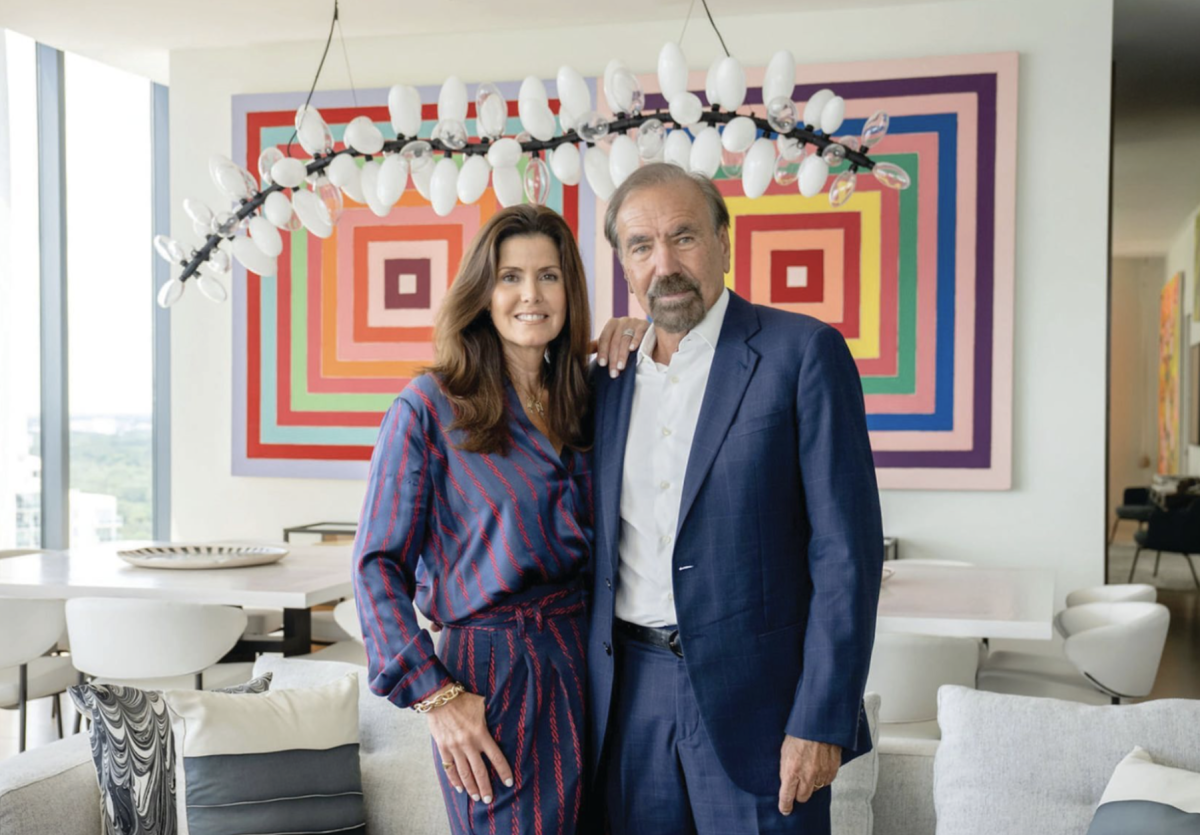
Everybody knows that art is a status symbol. But this year’s Acquavella Distinguished Lecturers, Jorge and Darlene Pérez, are making strides to mitigate the inherent and historic elitism in the art world to edify generations to come.
On Feb. 12 in Broyhill Auditorium, the couple spoke with Professor John Curley about their experience as leading contributors to the art world. They detailed imbalances in representation and access, and their roles in reducing those disparities.
Jorge Pérez is the founder and CEO of the Related Group, one of the largest real estate development companies in the United States. He said his passion for art began at 18, when he visited New York City to purchase Marino Marini and Picasso lithographs, pieces still in his collection today.
He was born in Argentina and lived in Colombia for the better part of his childhood. In Latin America, he saw the significant disparity between rich and poor people and knew he “want[ed] to equalize the playing field.”
His wife, Darlene, is a registered nurse practitioner and member of the Wake Forest University Board of Trustees who has made philanthropic contributions to the Miami Cancer Institute to support the center’s use of art “to improve patients’ wellbeing.” She said that EEG scans have shown that exposure to art improves patients’ morale.
Answering questions submitted by art history students, Darlene and Jorge Pérez said that their interest lies in contemporary art that is socially conscious.
“We like contemporary art because we are in dialogue with both the artists and the strong social commitment they have in the work that they do,” Jorge Pérez said.
They pride themselves on buying and supporting artists from diverse backgrounds, such as Cuban artist Roberto Álvarez Ríos, Ghanaian sculptor El Anatsui and South African artist William Kentridge.
“It’s powerful when young people get to see their heritage,” Jorge Pérez said. “We want them to understand their culture better.”
Darlene added that the couple believes “forming a diverse acquisition and curatorial team and strong relationships with political leaders” is vital.
Darlene and Jorge Pérez also said they value public access to art. Their nonprofit art space in Miami, El Spacio 23, is free and open to the public year-round.
The Pérezs also recently donated a Joan Mitchel triptych titled “Iva,” which used to hang in their bedroom, to the Tate Museum’s Rothko Room. Museum Director Maria Balshaw described the gift as “one of the most important Tate has received.”
“We set the terms that the piece has to be there for a minimum of 15 years without being taken down, and hence be re-presented every two years in the Tate or another museum,” Jorge Pérez said.
The presence of art is healing, socially and literally, and the Pérezs are contributing to an enduring legacy by supporting and publicizing art.